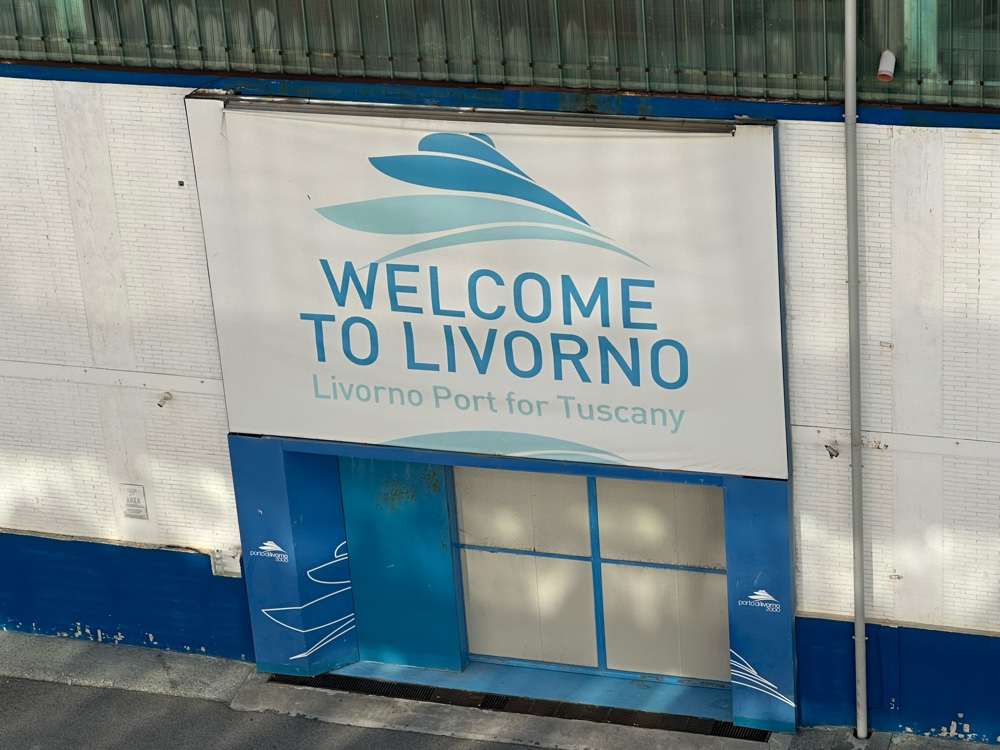
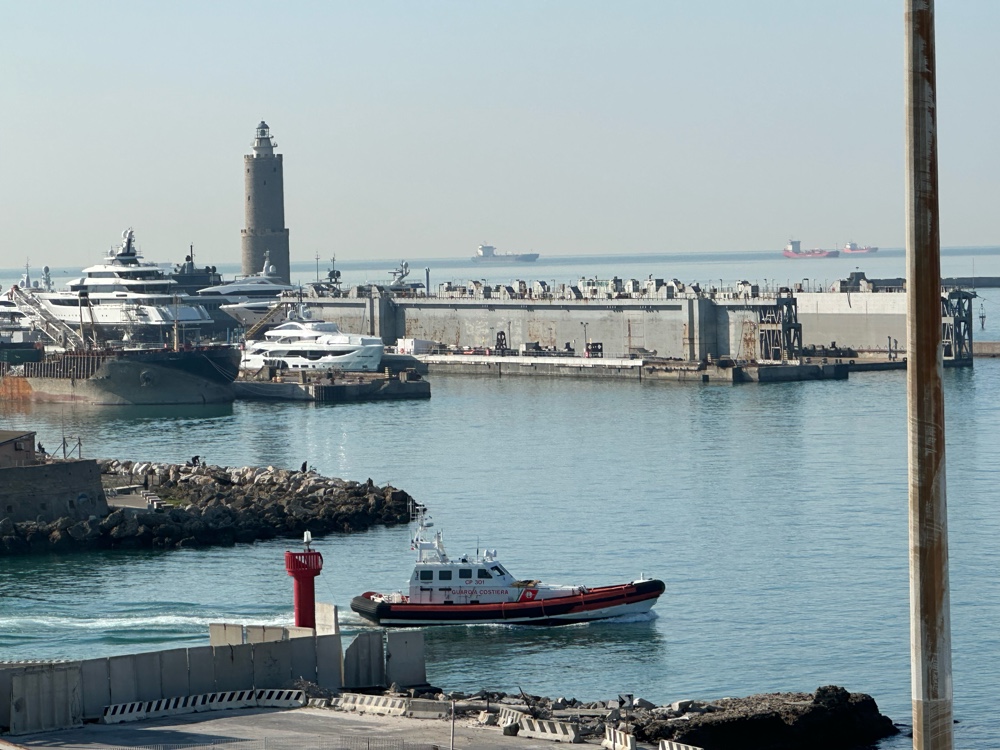
Today we docked at Livorno, the port city for the region of Tuscany, which includes Florence and Pisa.
I left mid-morning for a “Florence On Your Own” excursion.
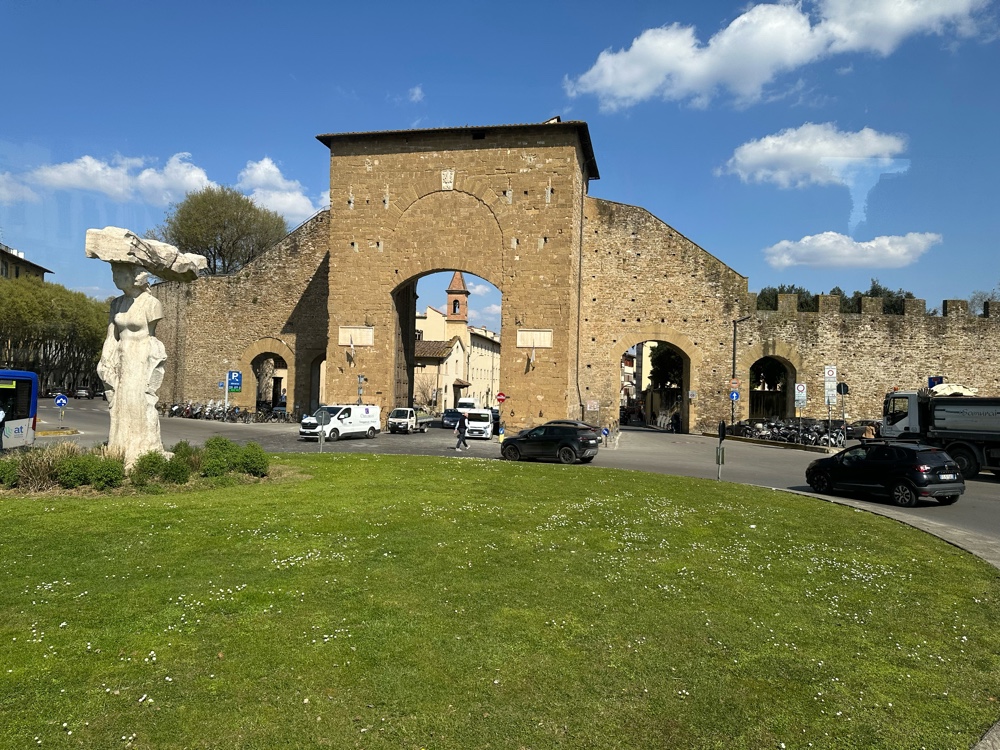
As we entered Florence, we passed the one remaining gate from the old city wall - the Porta Romana. The marble statue in front is of two women, one perpendicular atop the other, is by the contemporary artist Michelangelo Pistoletto. I have no idea what the sculpture is about, despite looking it up on Wikipedia.
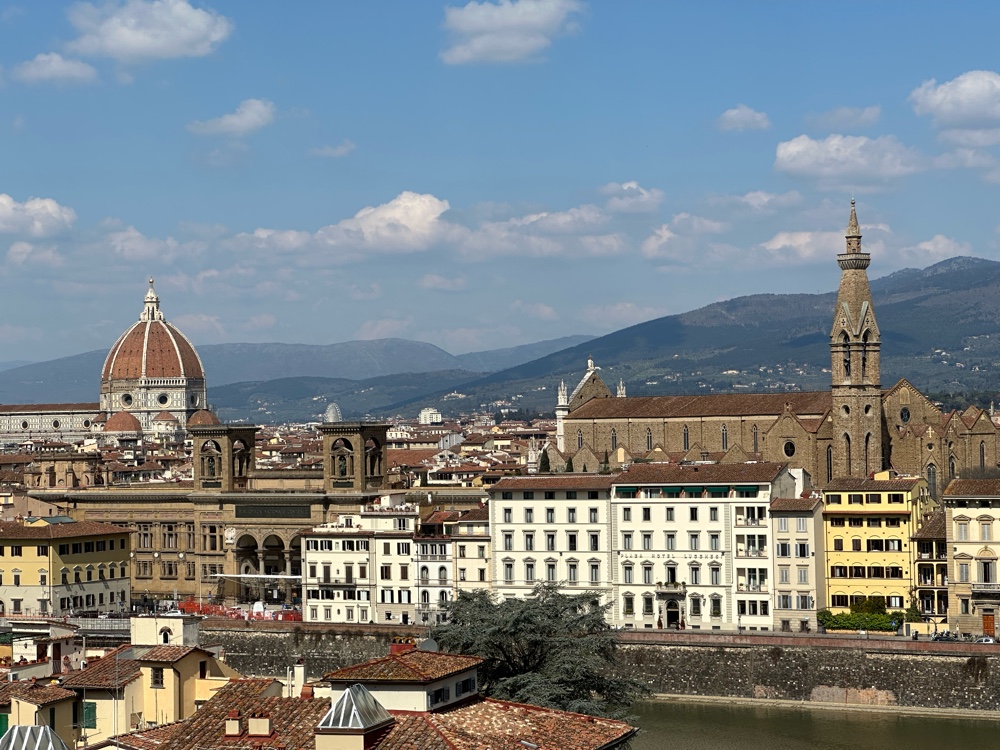
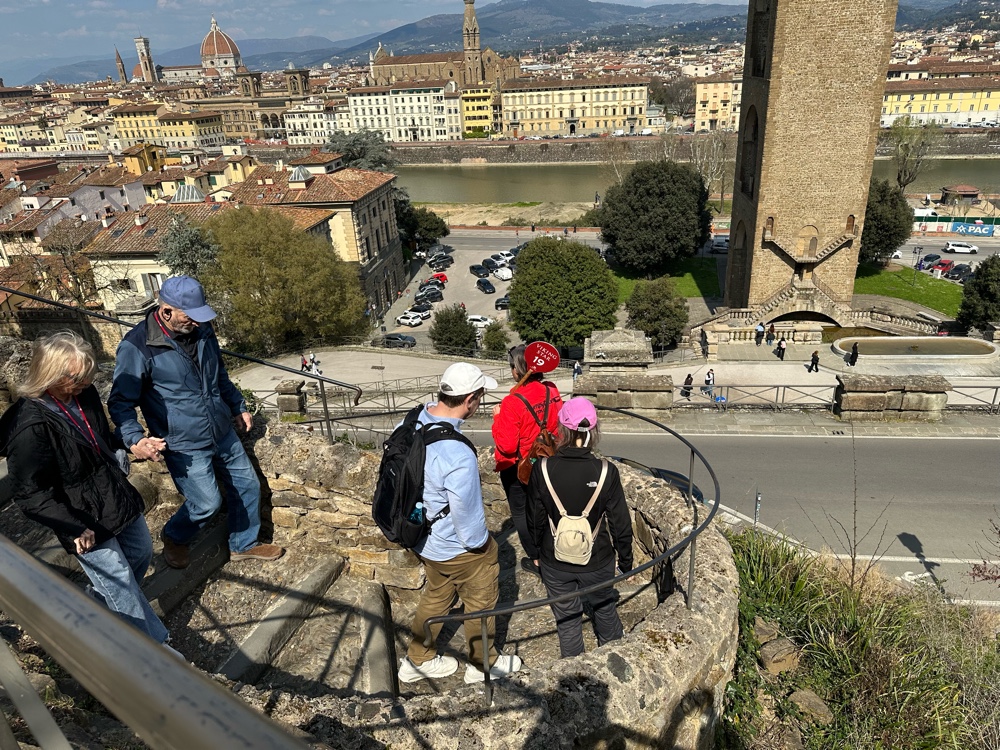
The bus dropped us off at Piazza Michelangelo, which offers great views of the city.
The mile-and-a-half walk into the center of the city was downhill - steeply so in places.
Since I had a timed ticket for the Accademia Gallery, I went on ahead on my own - the guide was taking it slow enough for the less agile people in the group.
I knew that finding the Accademia would be challenging. Most museums are located in prominent locations, like major piazzas. Not the Accademia - it’s on a narrow side street. It’s not very far from the Duomo (the cathedral), but the streets go in all directions, and buildings are tall so you can’t see landmarks. I used Apple Maps but still had to ask a shop owner for exact directions when I got close. It didn’t help that the sign pointing toward it was entirely obliterated by graffiti and stickers.
Nevertheless, I arrived right on time and was allowed to go right in.
The gallery has lots of paintings, particularly from the Renaissance, antique musical instruments, but my favorites are the statues.
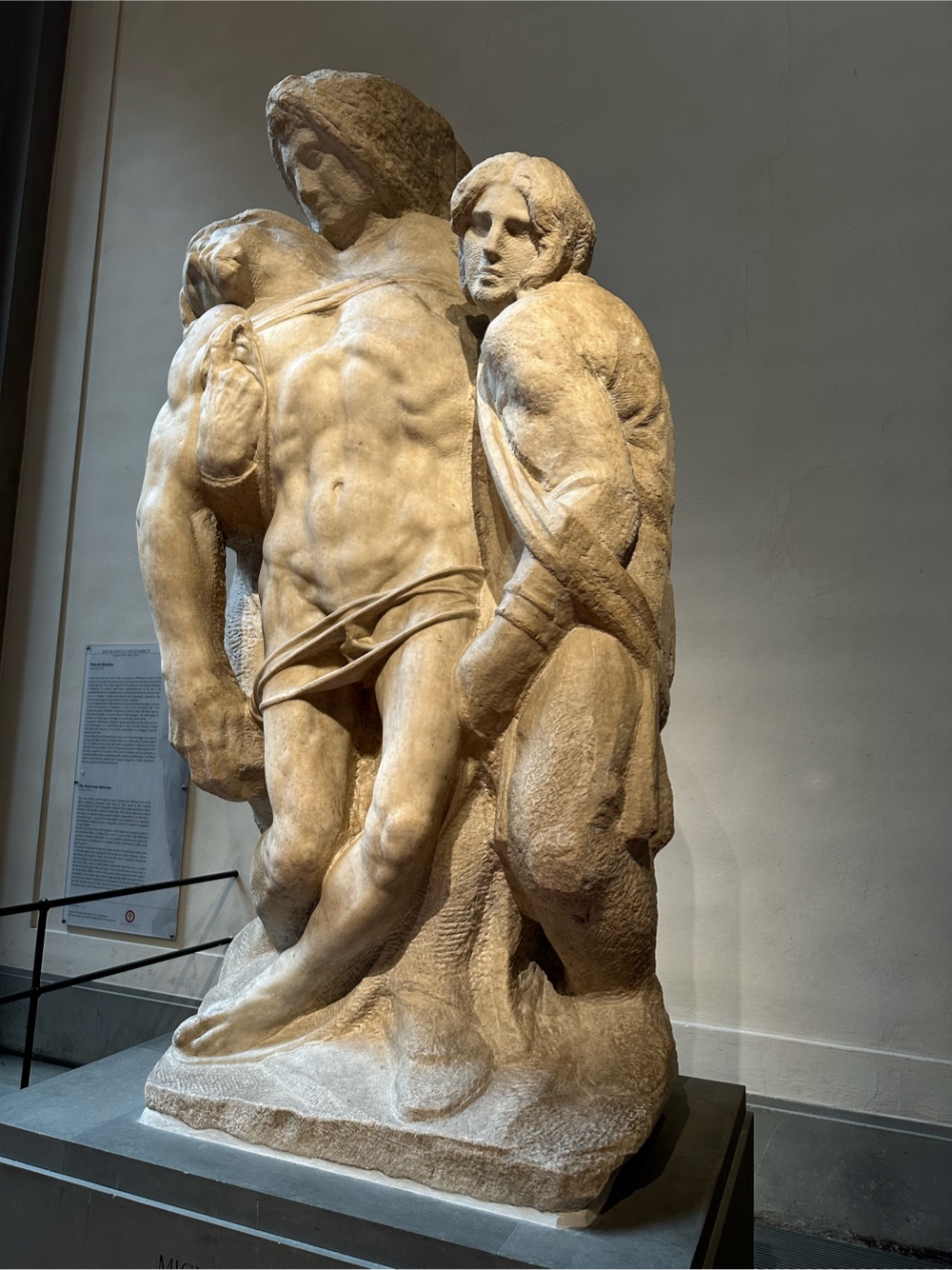
This Pieta (Mary holding Jesus’s body) is from late in Michelangelo’s career - the Pieta in the Vatican is one of his first works. According to the gallery’s description, there’s debate about whether it’s one of Michelangelo’s, or possibly by Bernini, who admired and emulated his work.
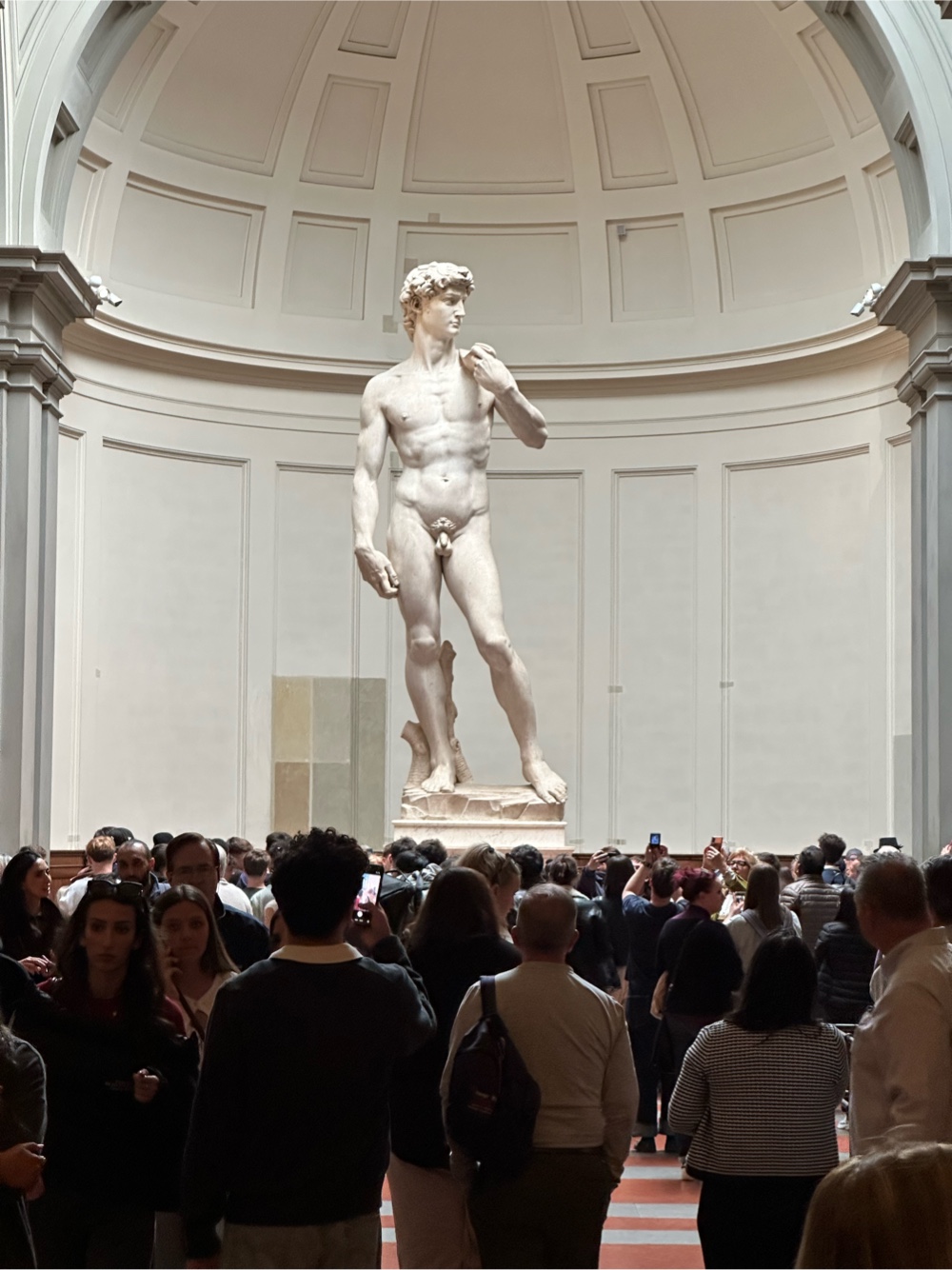
But there’s no debate about this one - the highlight of the Accademia.
Every time I see this statue, I’m amazed by it.
Many critics regard it to be Michelangelo’s statement about the Renaissance - David is looking confidently toward the future.
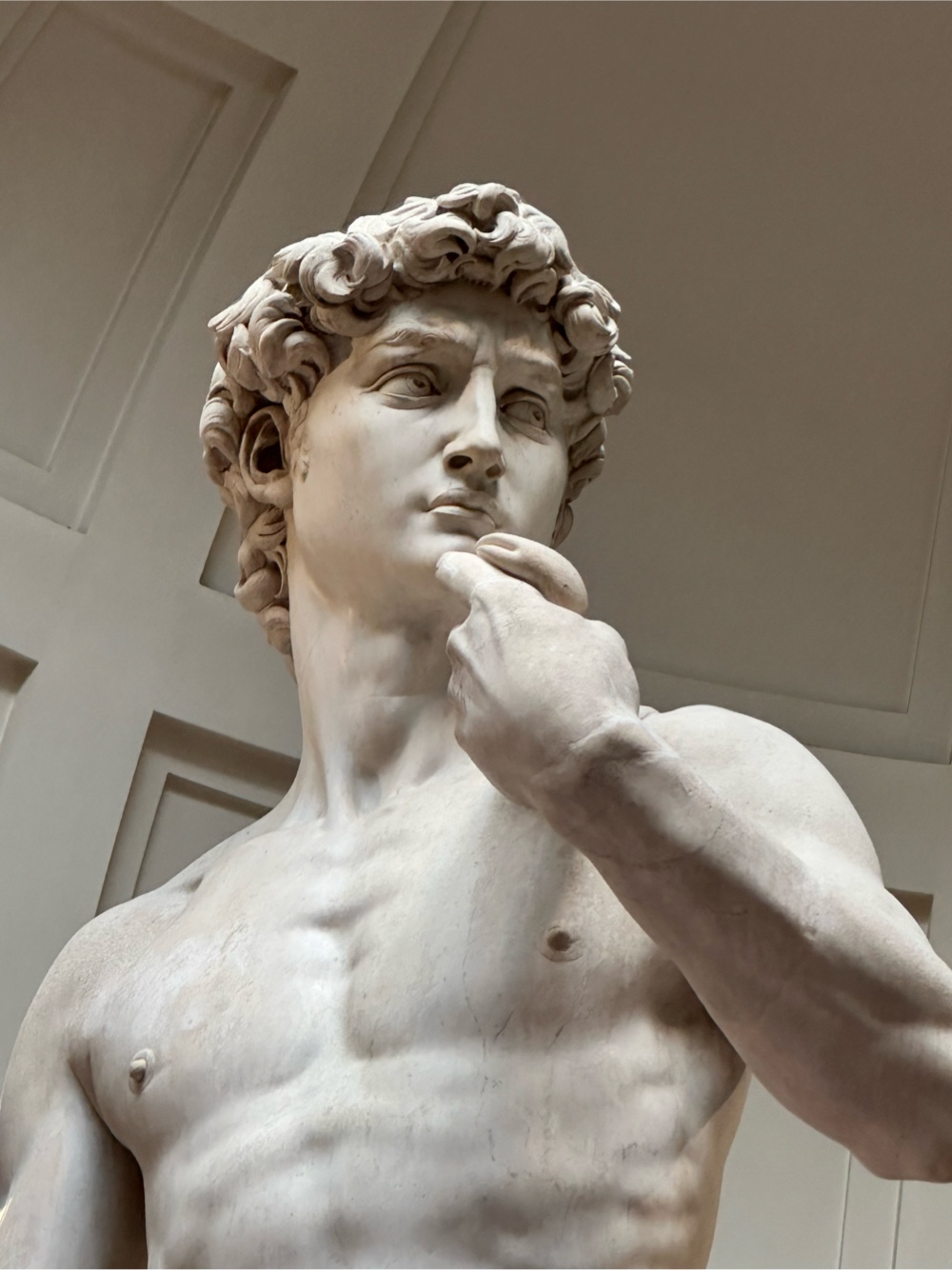
Is he about to sling a rock at Goliath, or has he just done it? I think it’s the former - he’s got his shot lined up and ready to sling. And he’s confident. The traditional interpretation of the David and Goliath story is about a little guy taking on a giant. I agree with Malcolm Gladwell’s interpretation that it’s more about knowing and using one’s strengths. David was a shepherd (pretty low on the status ladder), but he was really good with a sling, which was a weapon for killing predators. And he’d had lots of time to practice because what else was he going to do all day while he was watching the flock. Goliath was a very big, slow target compared to the predators he was used to killing.
That facial expression says, “I’ve got this.”
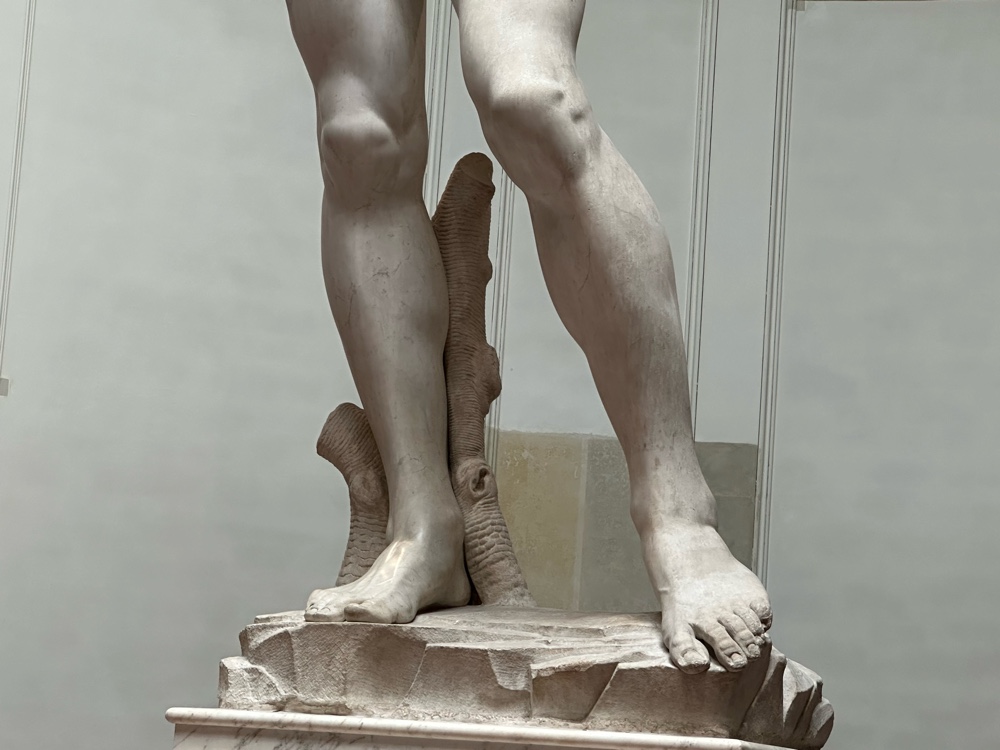
I learned something else about the statue when I was on the Rick Steves tour last fall. The Greeks had figured out how to balance figures so that they could be freestanding and not topple over, but that knowledge had been lost for millennia. This is the first example since the ancient Greeks to achieve that balance.
The only support piece is the small wood stump that’s carved around the right ankle, because that foot is bearing nearly all the weight of the sculpture. The ankle is the weak point and needed reinforcing to avoid potentially breaking. Otherwise, this is an entirely freestanding sculpture. That’s some serious engineering.
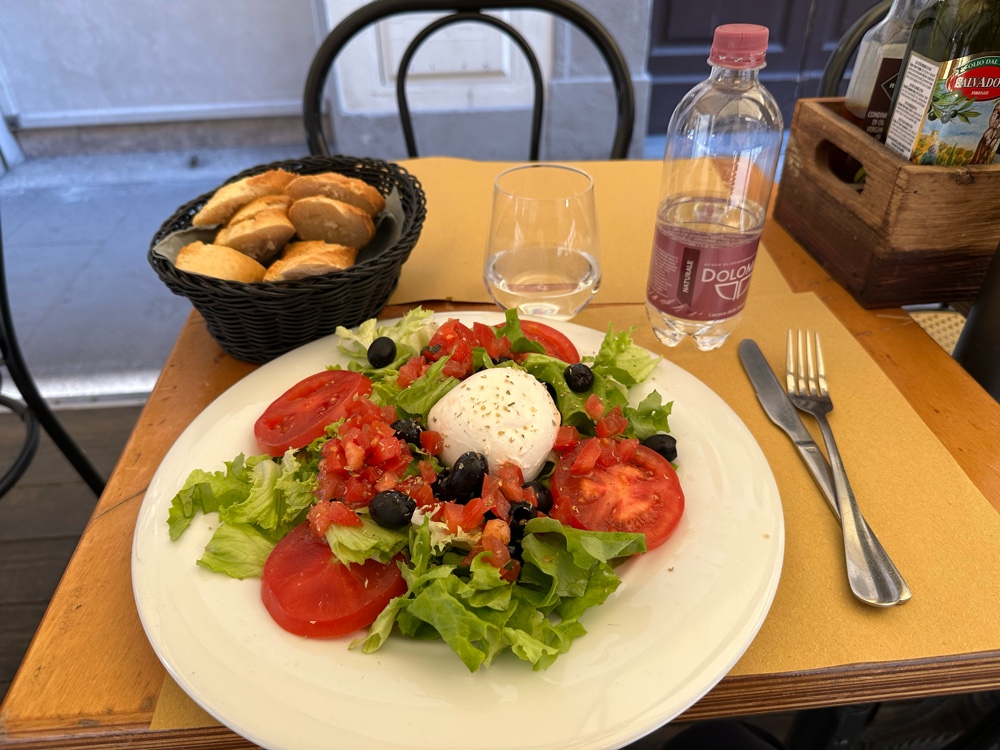
Once I tore myself away from admiring David, I wandered down the street and stopped at a sidewalk cafe for a tasty but overpriced lunch.
I should have remembered that when the waiter puts a basket of bread on the table (without my asking for it), I’m going to be charged for it. Oh, well. The salad was very good.
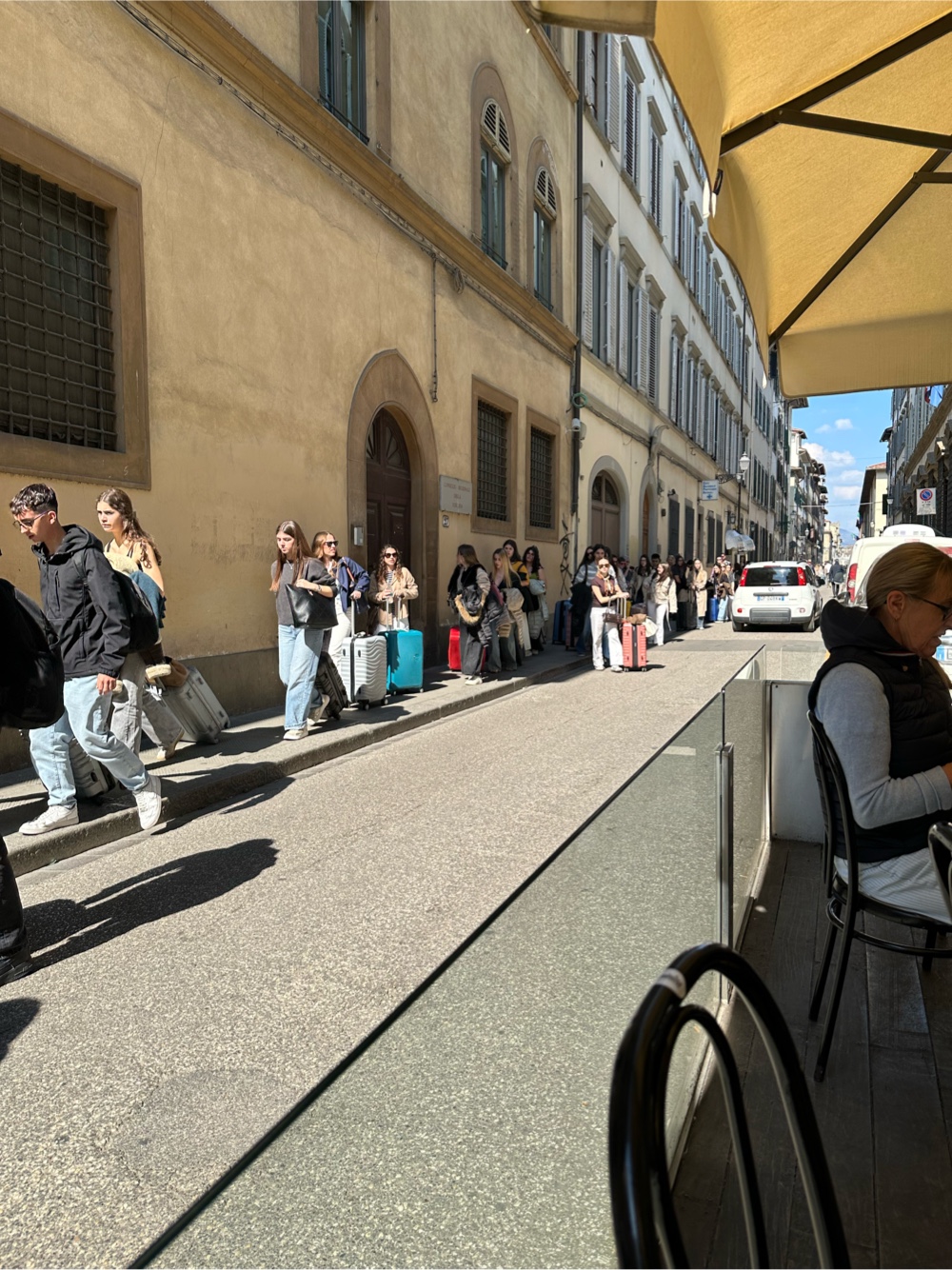
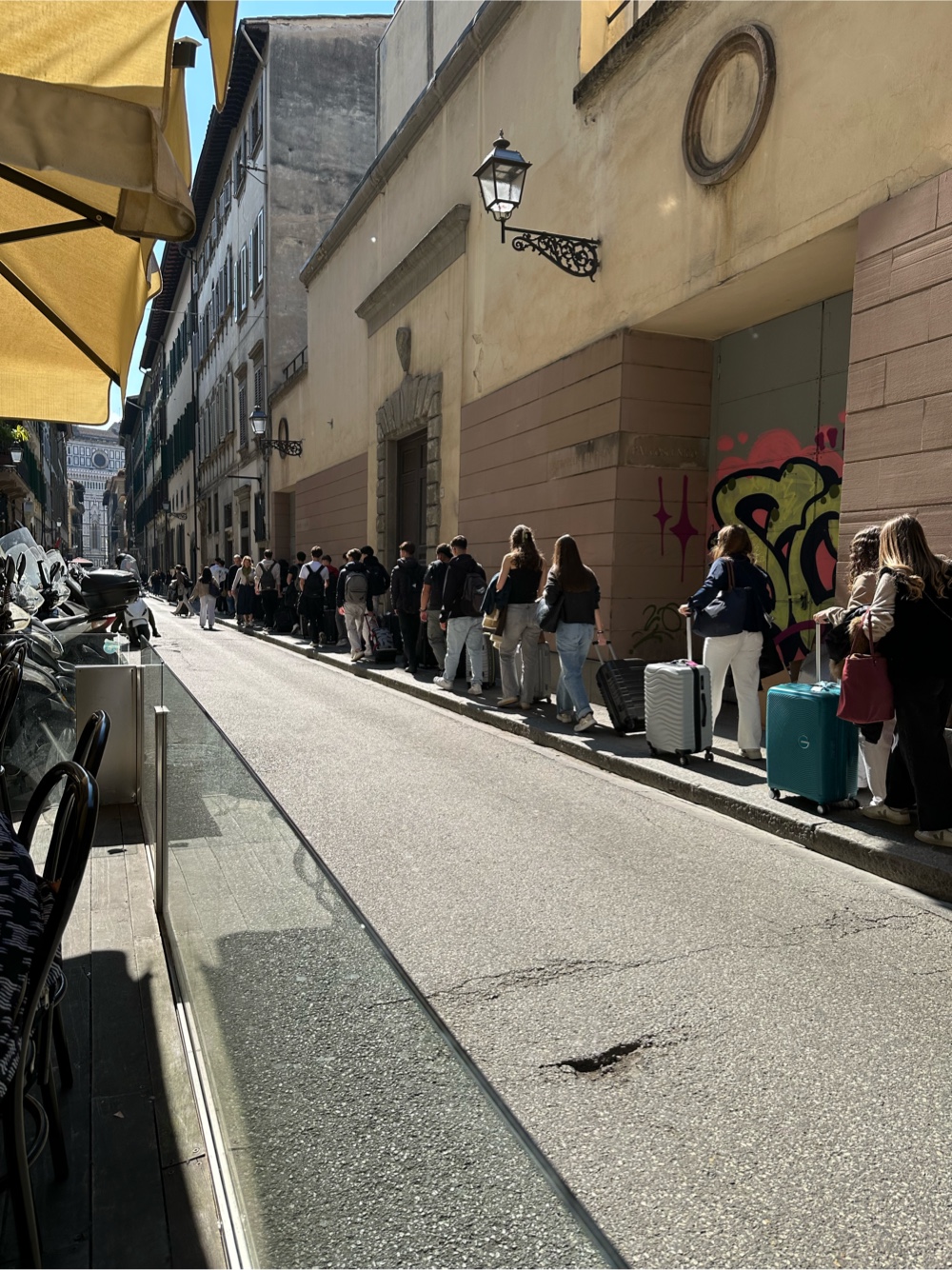
I was amazed at how many student groups were in Florence today. As I ate my lunch, an interminable line of teenagers clattered their roller bags down the uneven sidewalk (maybe 50 or so).
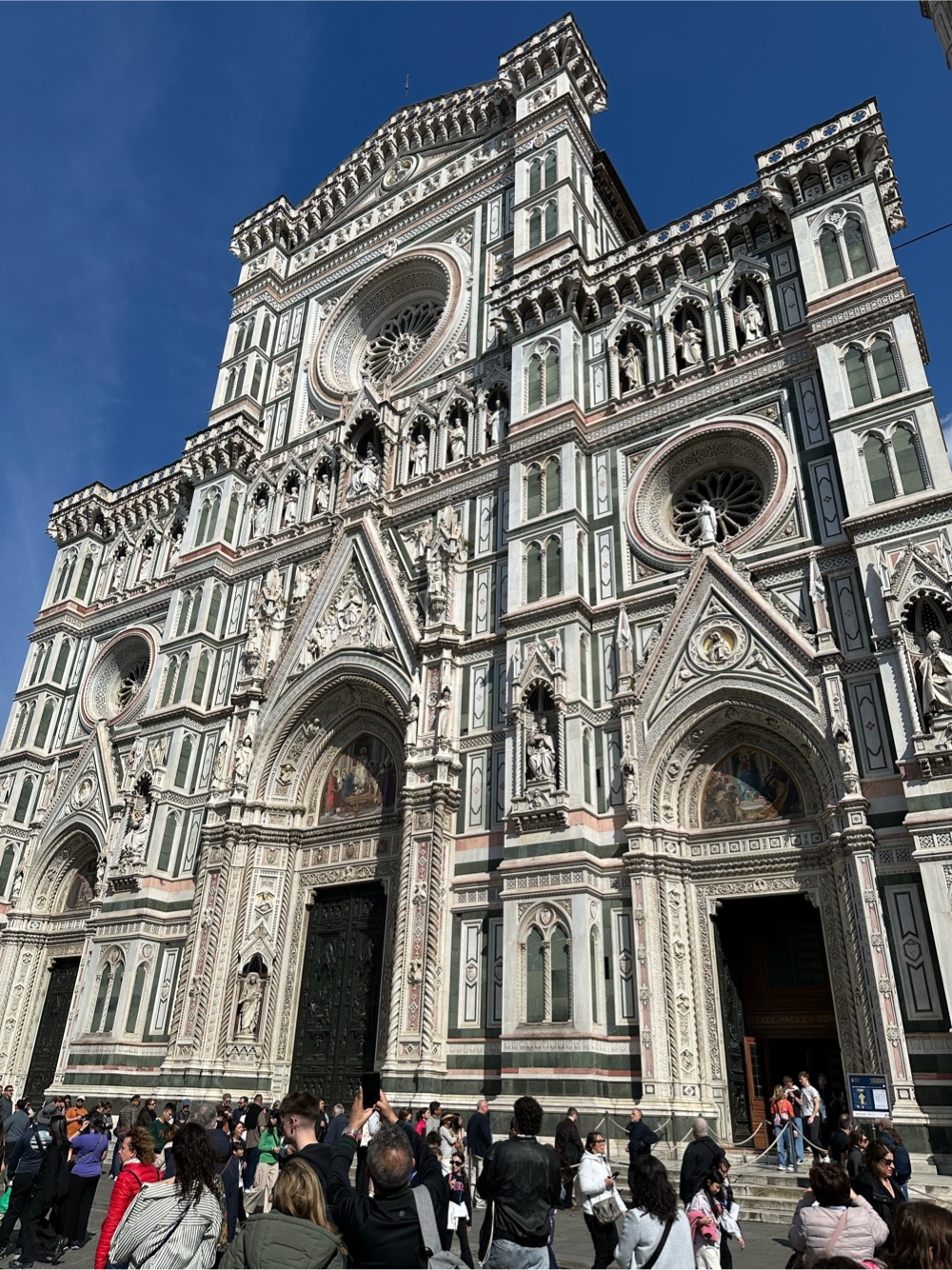
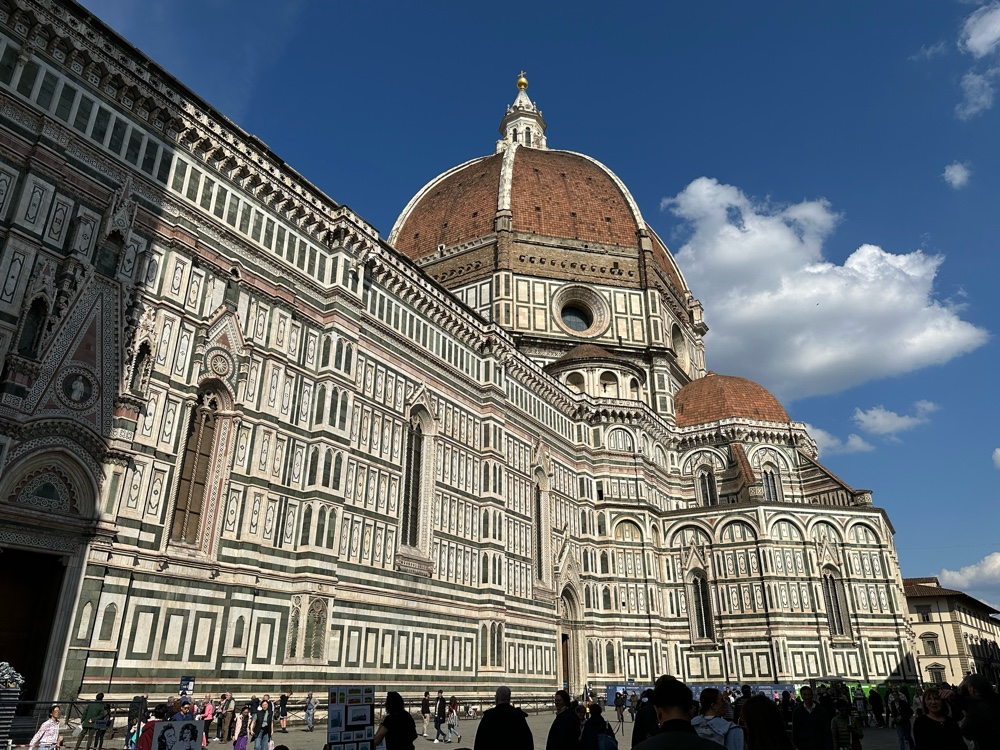
I wanted to go into the Duomo, which is one of the few sites that doesn’t have an entrance fee. The exterior is gorgeous (the different colors are different varieties of marble).
However, the line to enter was well over a block long, and two of three people deep. And moving slowly. No thanks.
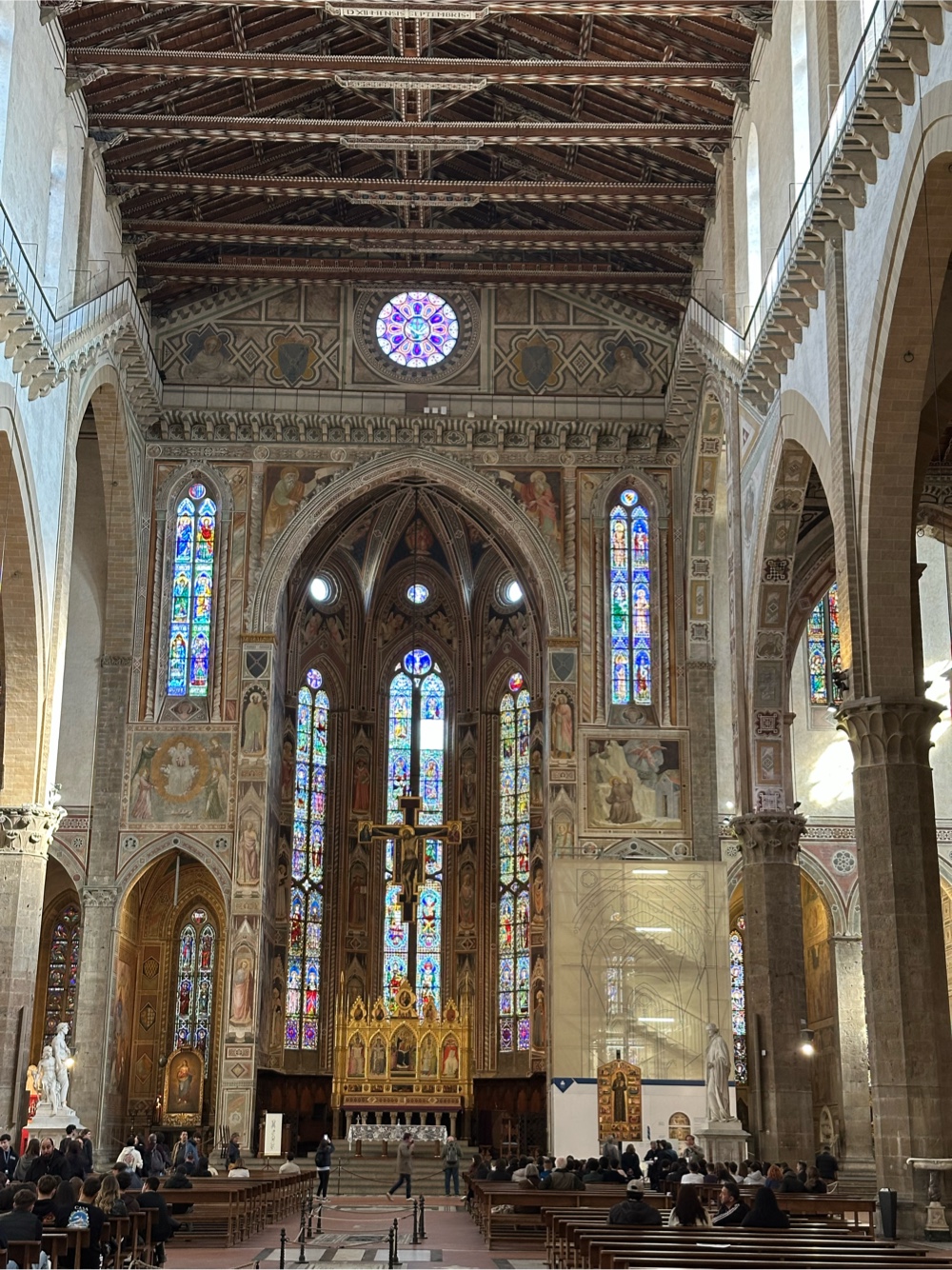
So I wandered over to Piazza Santa Croce (Holy Cross) to make sure I knew where the meeting place was to walk back to the bus at the appointed time, and then I decided to part with €10 to enter the church of Santa Croce, which is the burial place for just about everyone who was anyone in Florence.
They were tuning the pipe organ while I was there - at first I was hoping someone was just getting ready to play it, but no such luck. Listening to a pipe organ get tuned isn’t a treat.
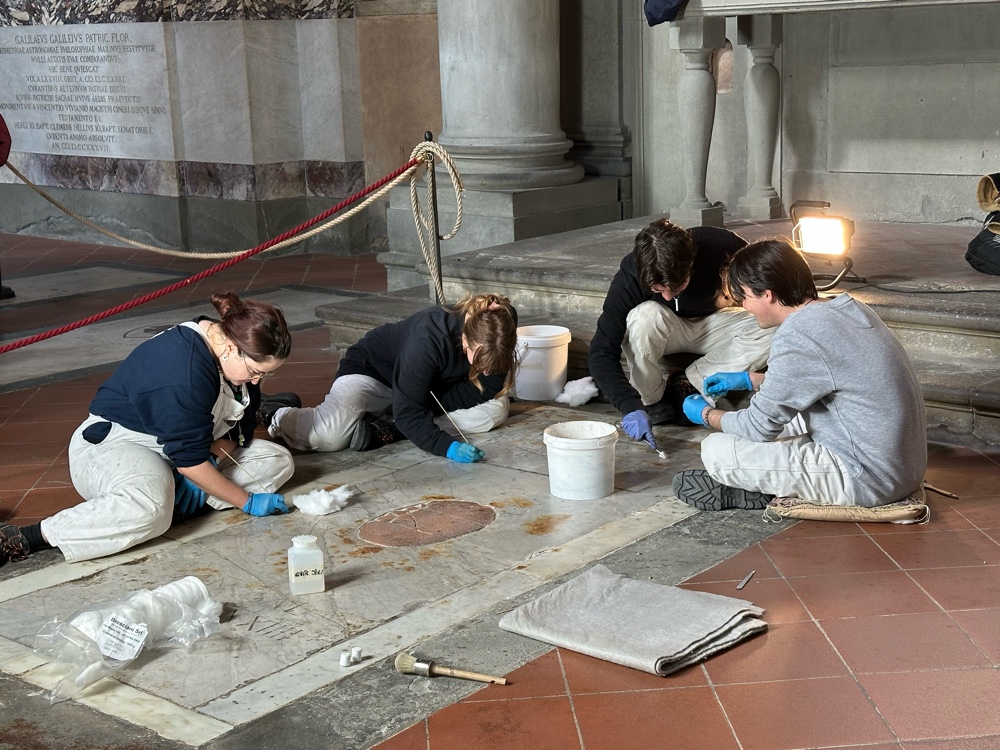
Several groups of young people (art students?) were working on restoring marble memorials in the floor.
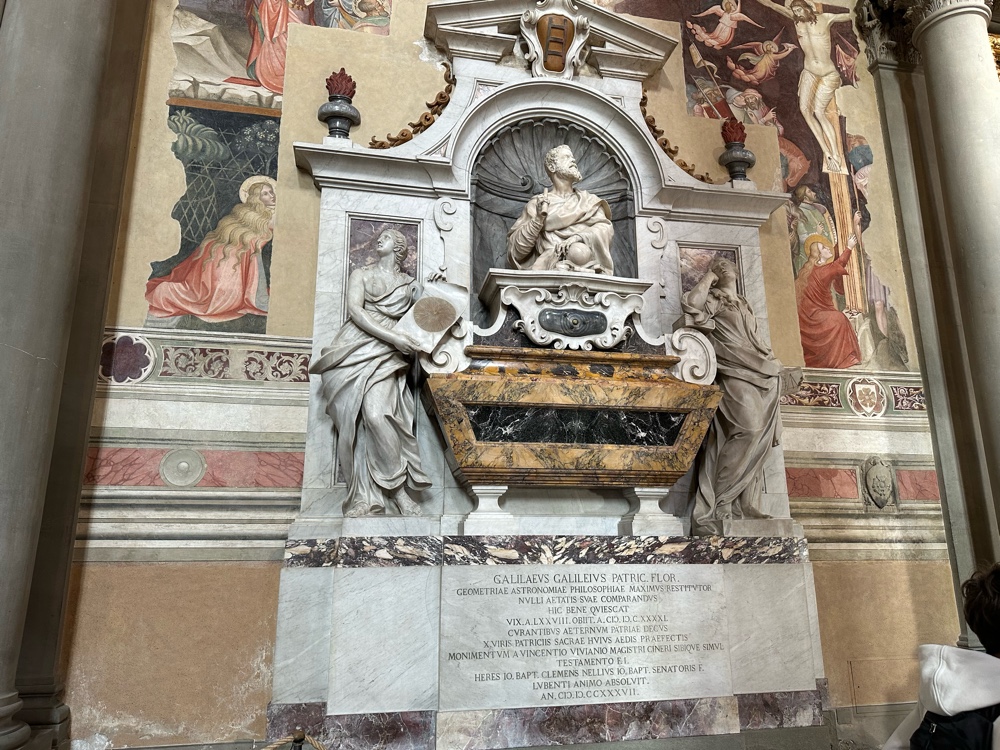
Galileo has an impressive monument, despite being excommunicated.
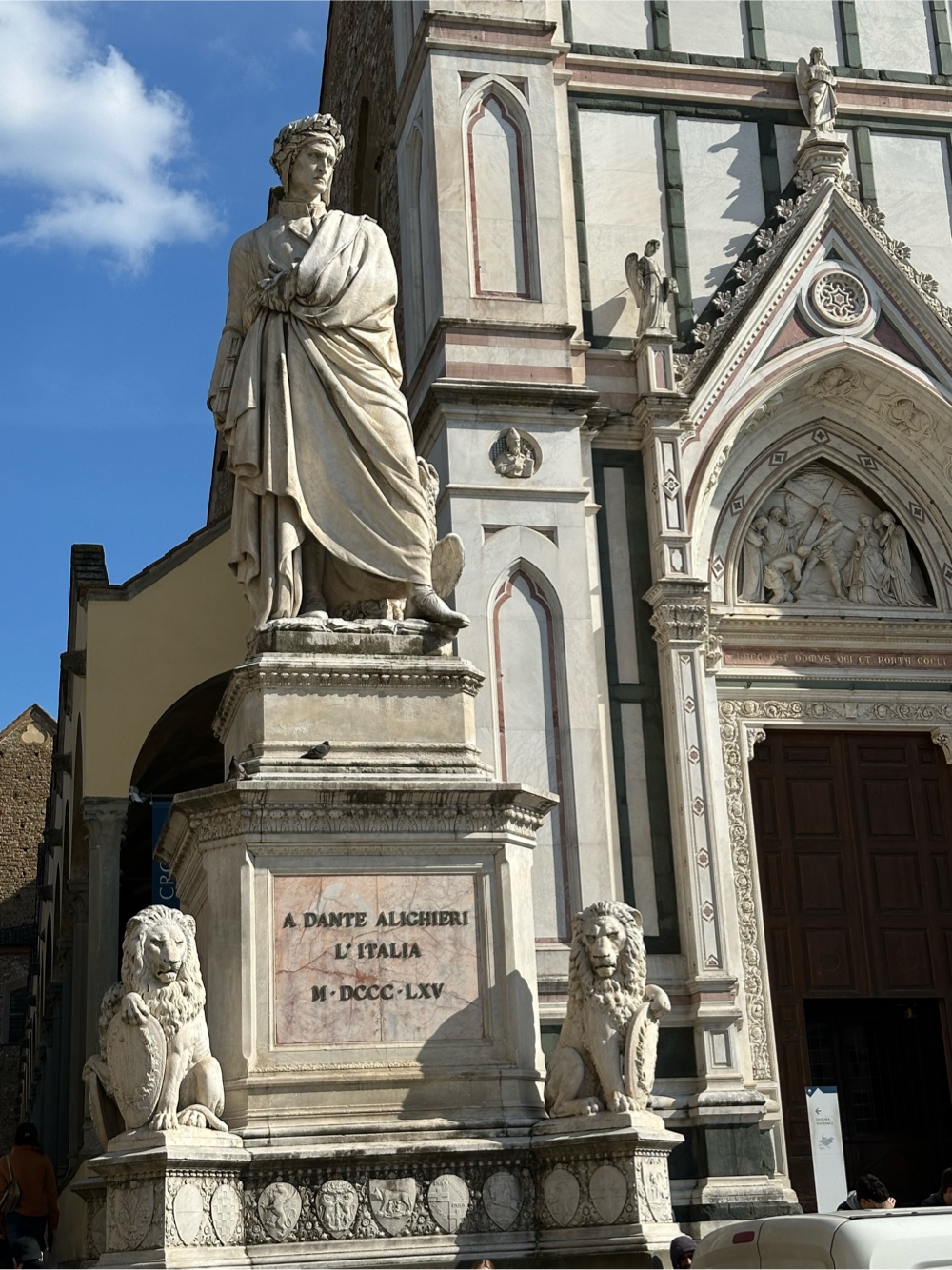
Dante was exiled (and was buried elsewhere), but he’s commemorated with a statue outside the church and a memorial inside.
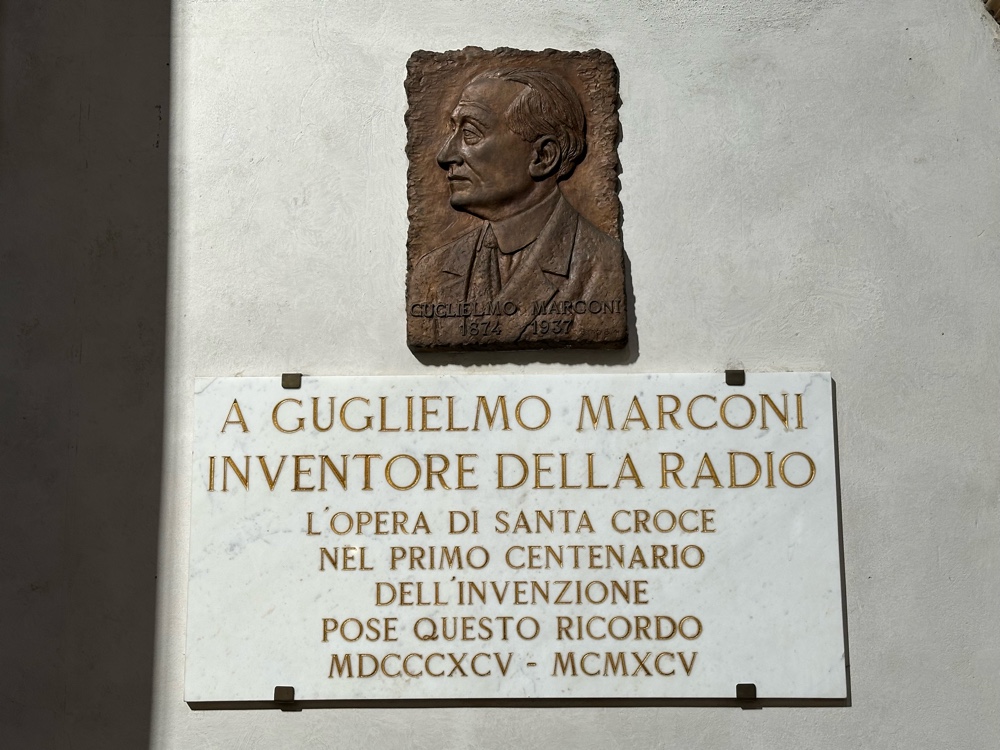
There were many others whom I hadn’t known were from Florence.
Florence Nightengale is there, too - she was born here.
In addition to the tombs and memorials, there’s a lot of art, including a number of frescoes by Giotto, considered the precursor to the Renaissance. Diane Hallstrom introduced me to his work.
By the time I left Santa Croce, it was about time to go to the meeting place. The walk to the bus stop was on level ground, but it was a little over two miles. (There’s no place in central Florence where buses can park for any length of time.). I’m used to walking a lot, but I was tired by the time we got there.
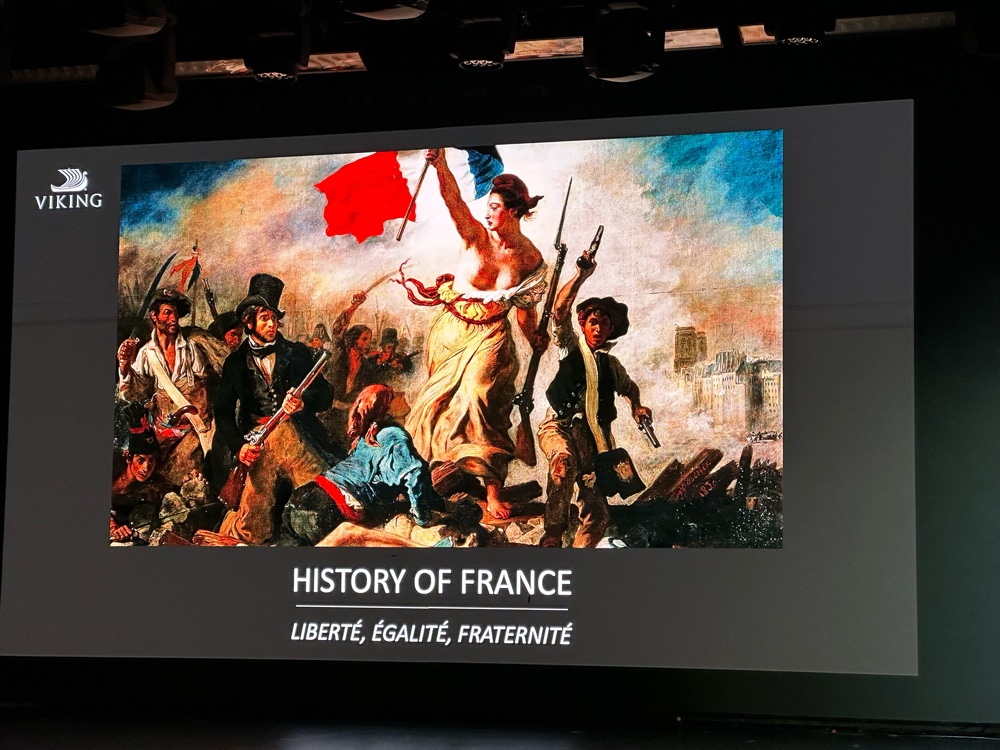
In t meantime, John enjoyed another talk by historian Lorrie Wenzel -
I’m sorry to have miss it - he said it was really good.
I got back just as the presentation ended, so I met John at the buffet for dinner, and then I was done for the day!
As you can probably tell from the photos, the weather was nearly perfect - clear skies, bright sun, and a high of about 70 degrees.

Comments
Post a Comment