First day in Venice,
Despite our best efforts, including getting out and walking in the fresh air and staying up until 10:00 pm Venice time, we both woke up at around 3:30 am with our brains telling us it was time to get up.
We had a hearty breakfast at our hotel before starting the day.
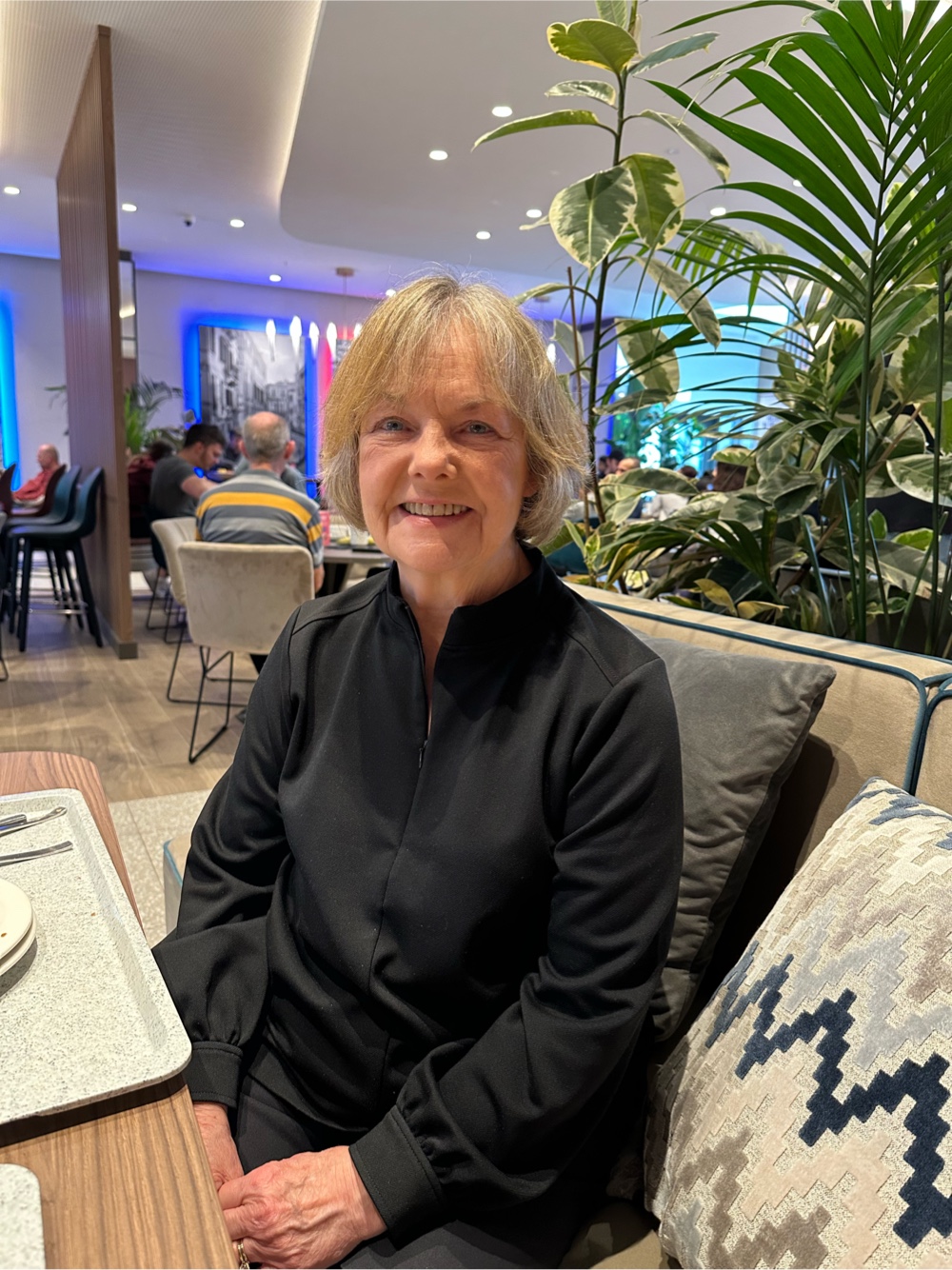
The photo’s a bit deceiving - the breakfast room was busier than this looks. John noted that after Italian, Russian was the most common language he heard, both at the hotel and throughout the city.
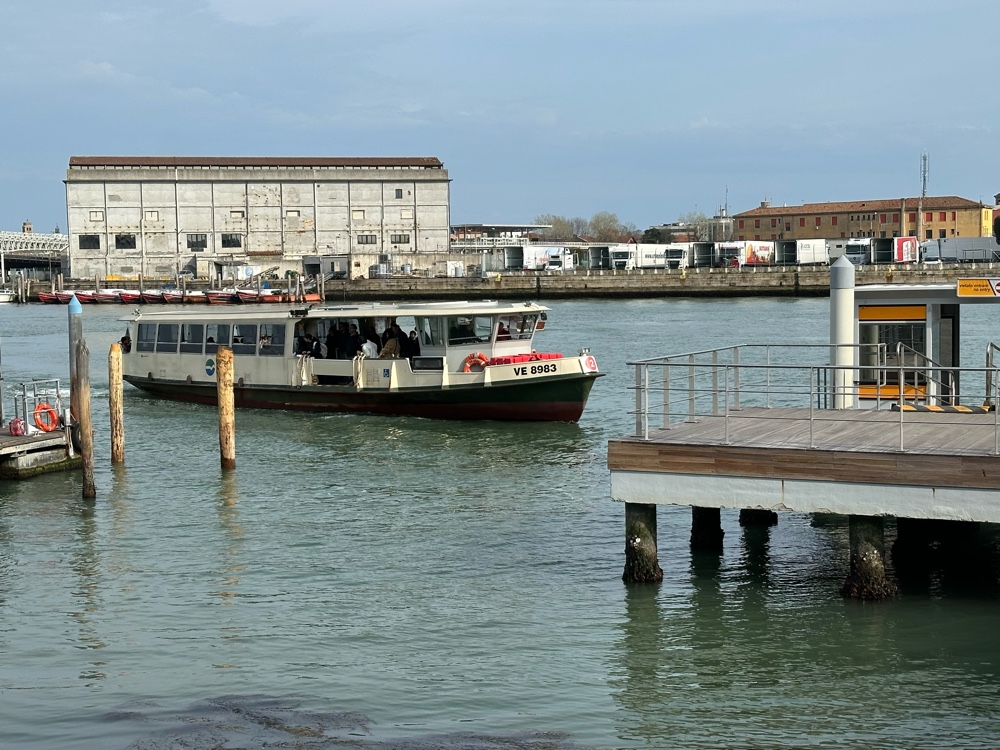
We started off by buying 24-hour passes for the vaporetto - passenger boats that serve as Venice’s answer to city buses. According to Google (would Google lie?), the term “vaporetto” comes from the fact that they were originally steam-powered (vapor=steam).
Buying the tickets should have been an easy process using the ticket kiosks at the dock. But I couldn’t get the contactless card reader to read my credit card. Other people seemed to be having some difficulty with it, but they were eventually successful. Not me. Thankfully, the nearby ticket office was open and we bought our passes there.
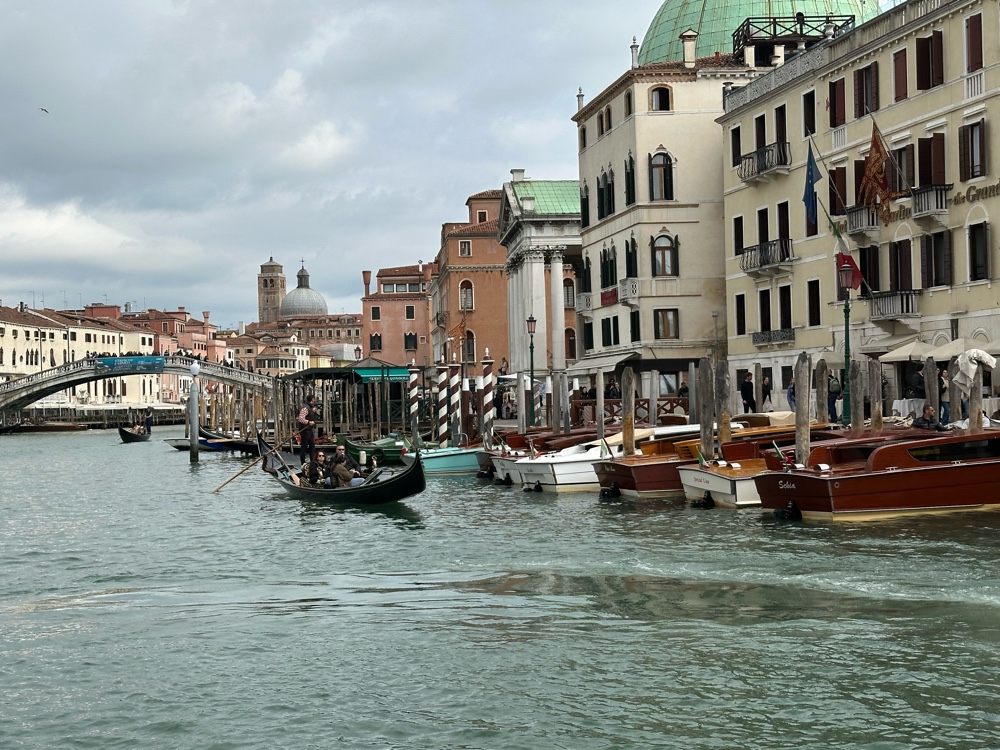
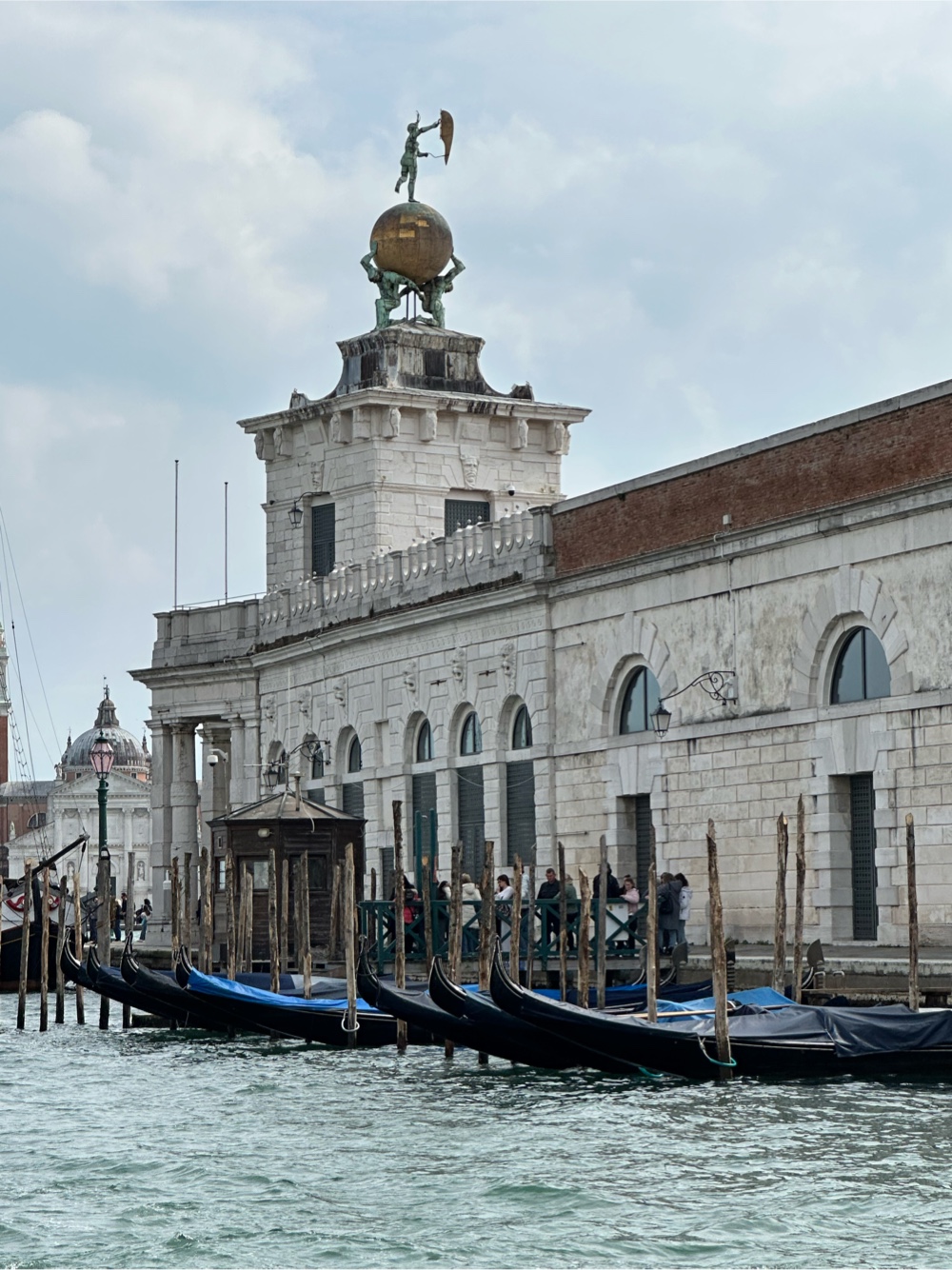
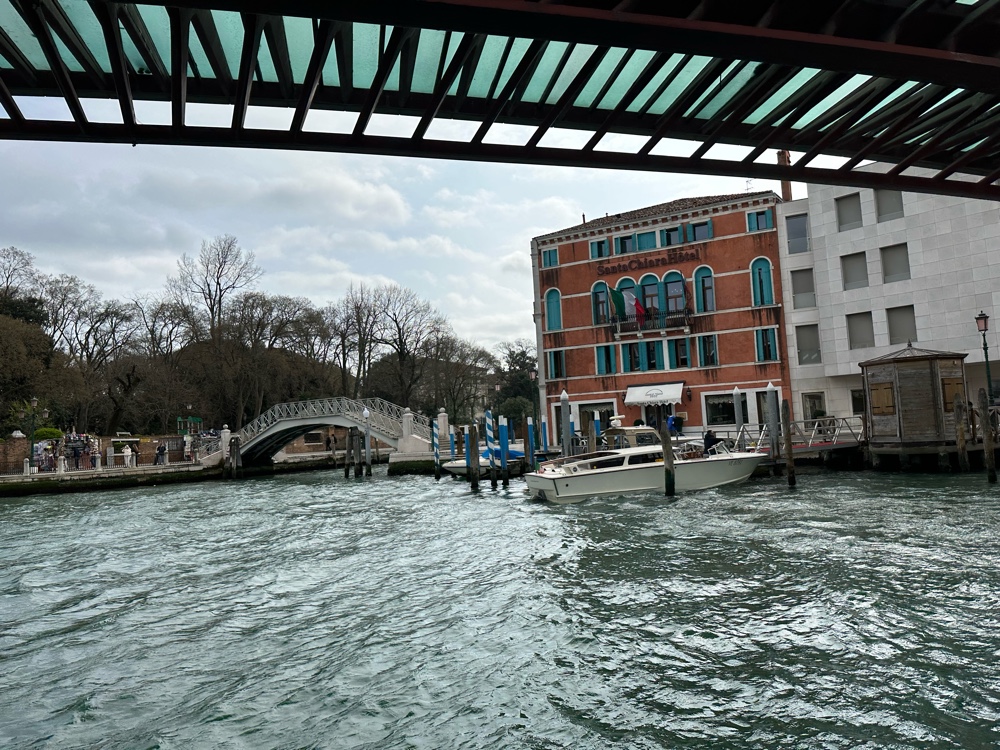
Our vaporetto ride took us the entire length of the Grand Canal - not as classy as a gondola nor as luxurious as a private tour, but it gave us a good view of the buildings and activity on the canal.
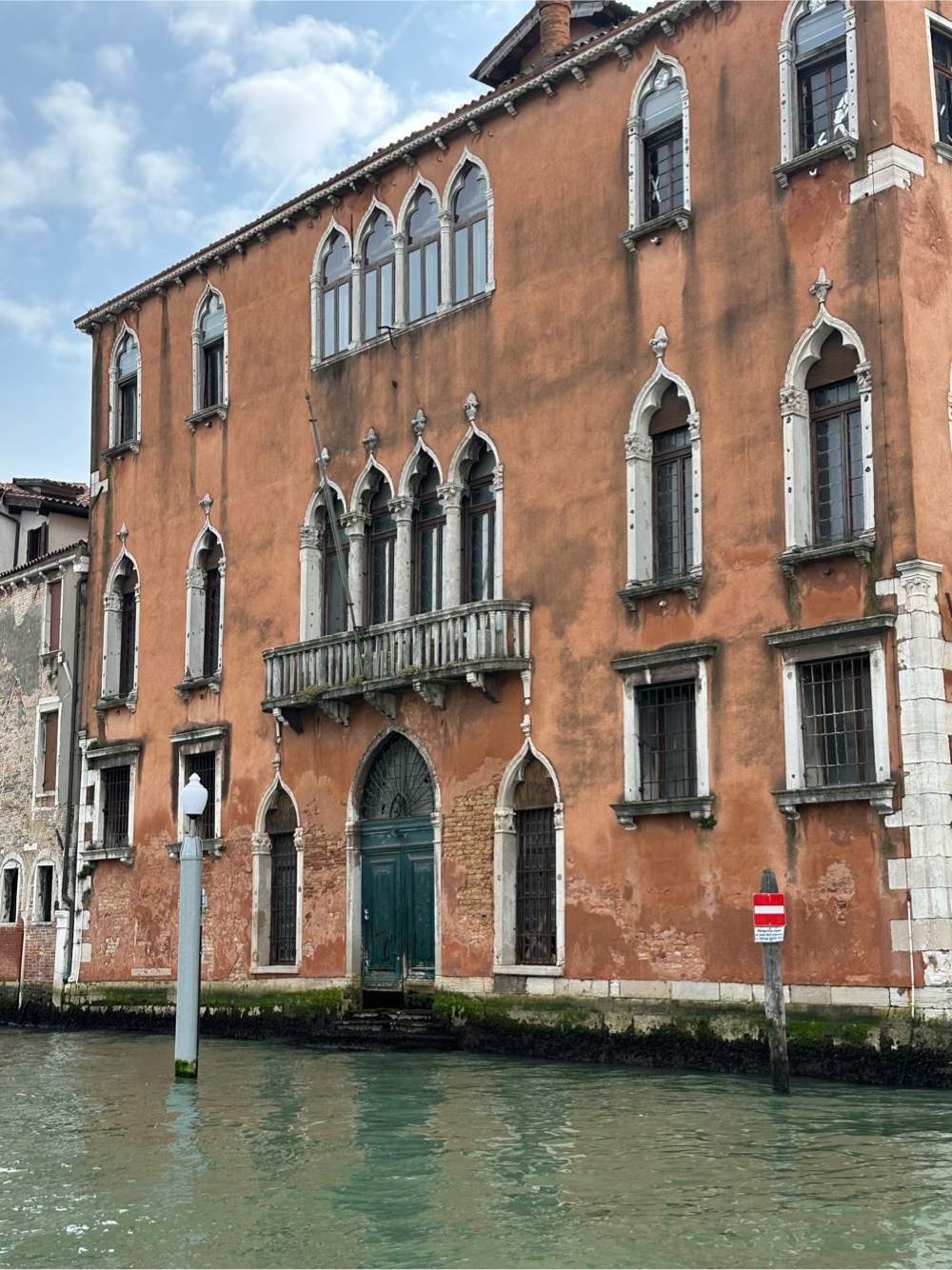
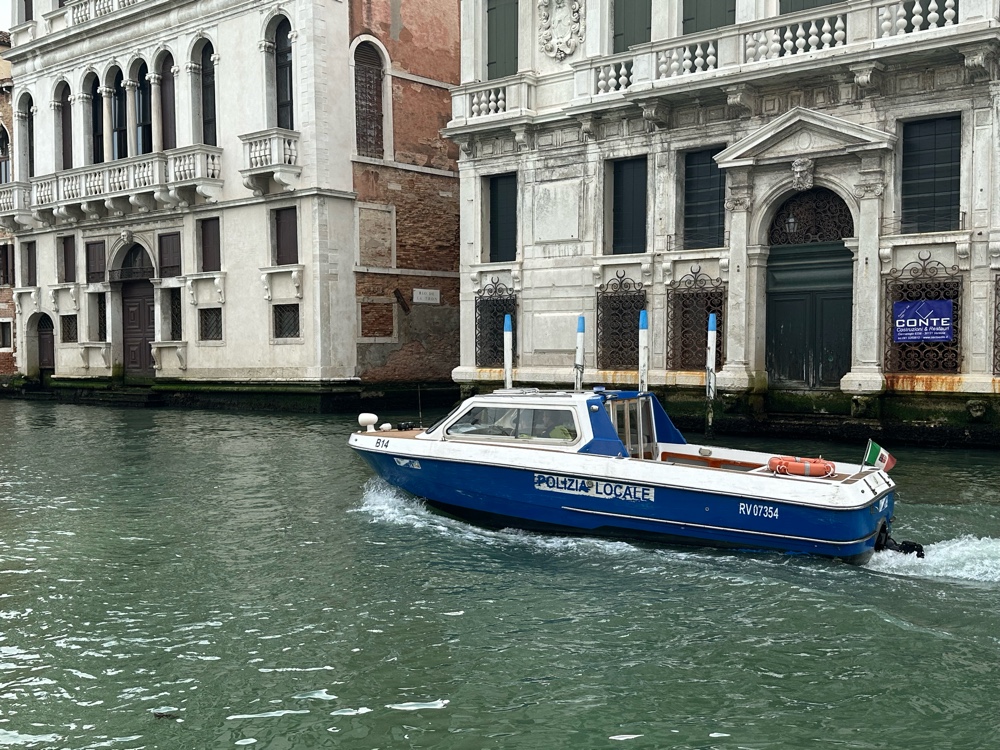
So many buildings are derelict or at least in need of serious repair, but the cost of renovation here - where everything has to be barged in and then hand delivered to the construction site - makes this sad situation understandable. Add to that the stringent historical preservation requirements, and it’s a wonder they haven’t all been abandoned.
You can also see that the waterline is above the bottom of the door in the above photo - the tide was low when I took this shot, but at high tide the ground floors of many of these buildings flood, making the space unusable.
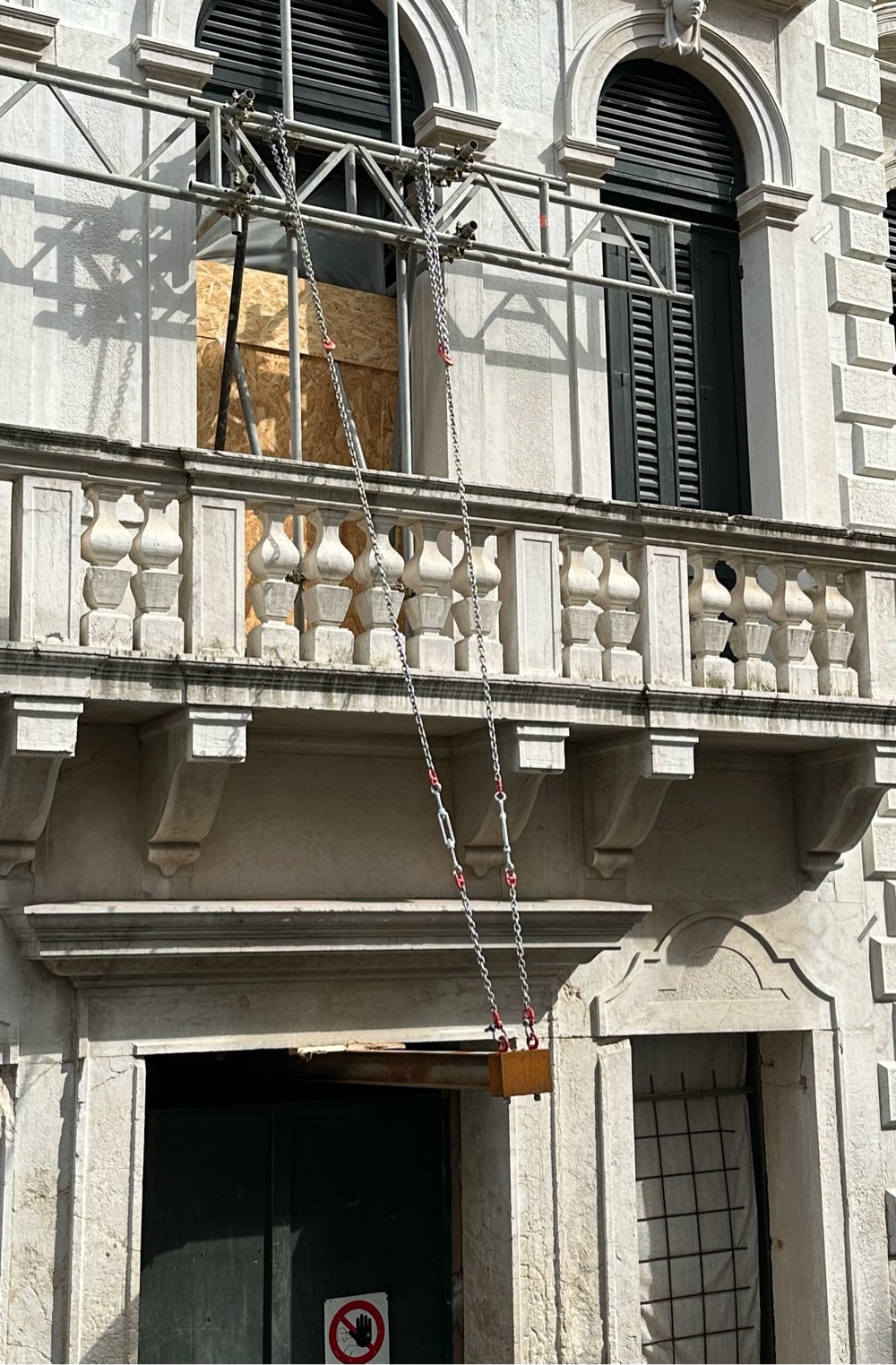
John spotted this unique method of shoring up a building - look closely and notice that a steel I-beam is being held up by a chain attached to some scaffolding. What could possibly go wrong?
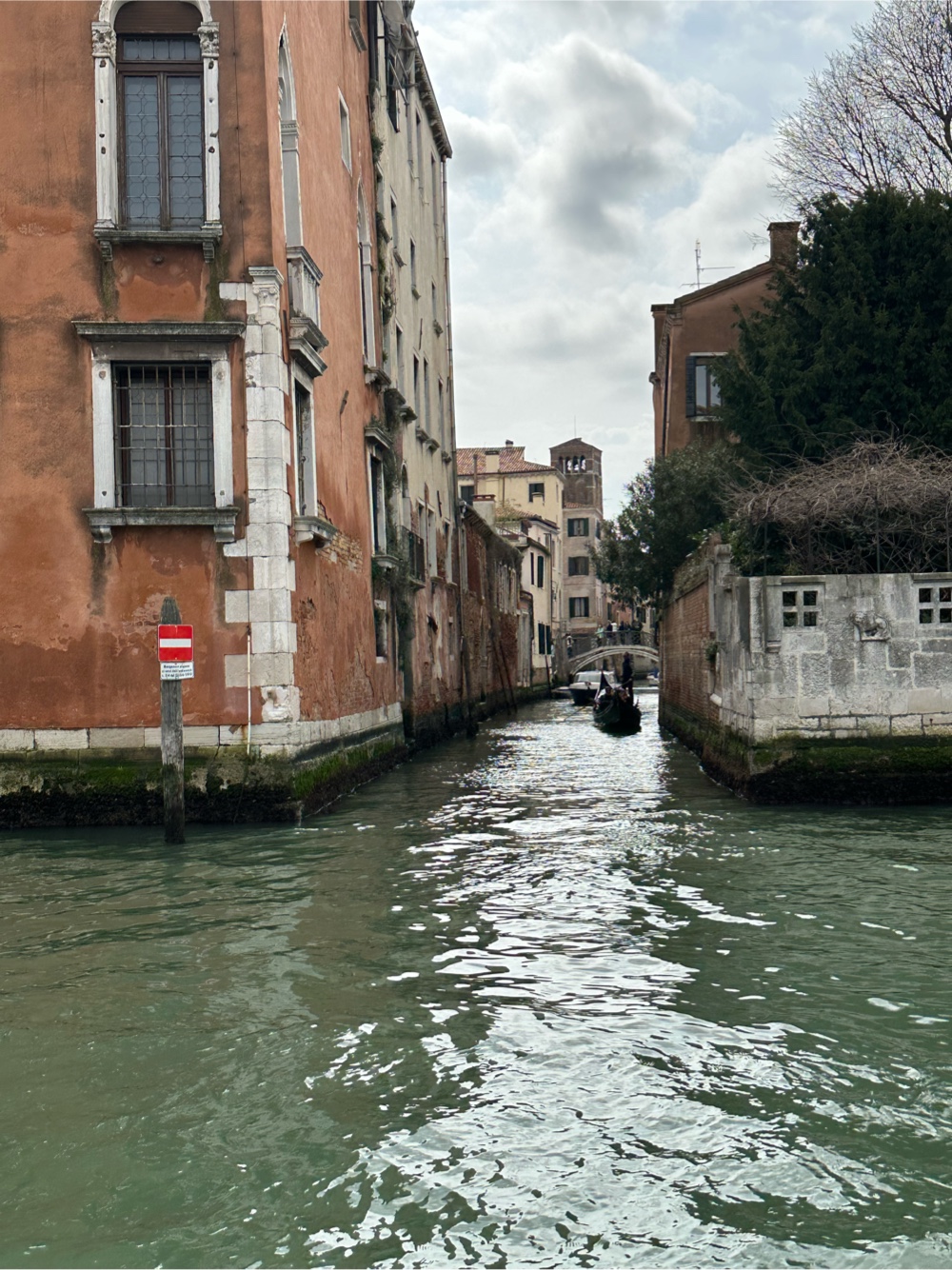
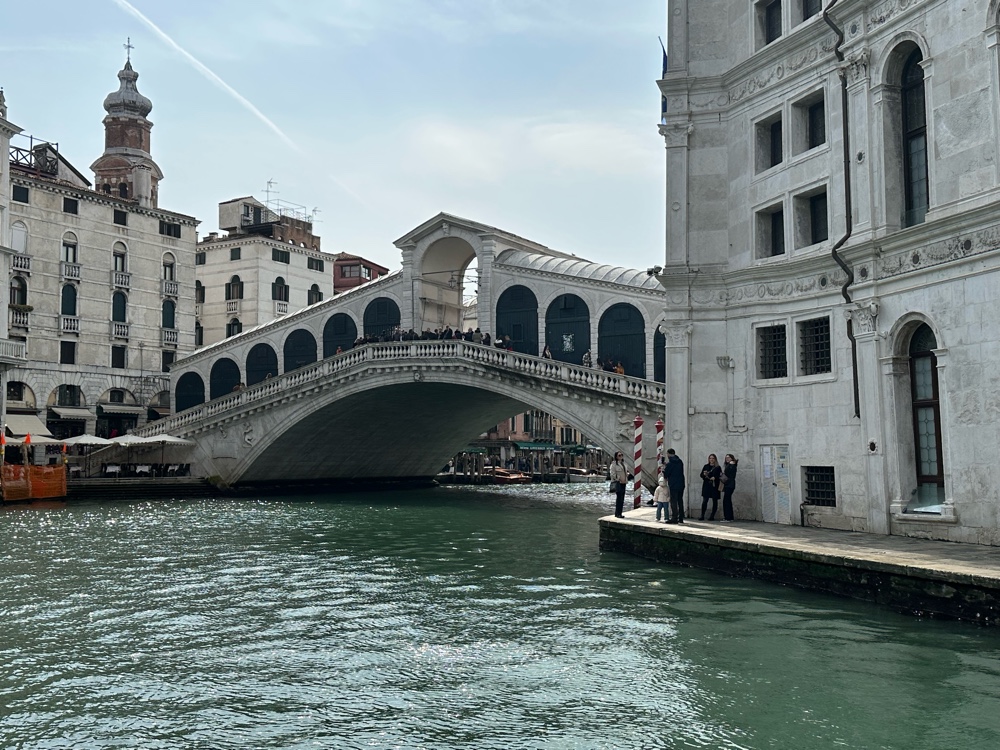
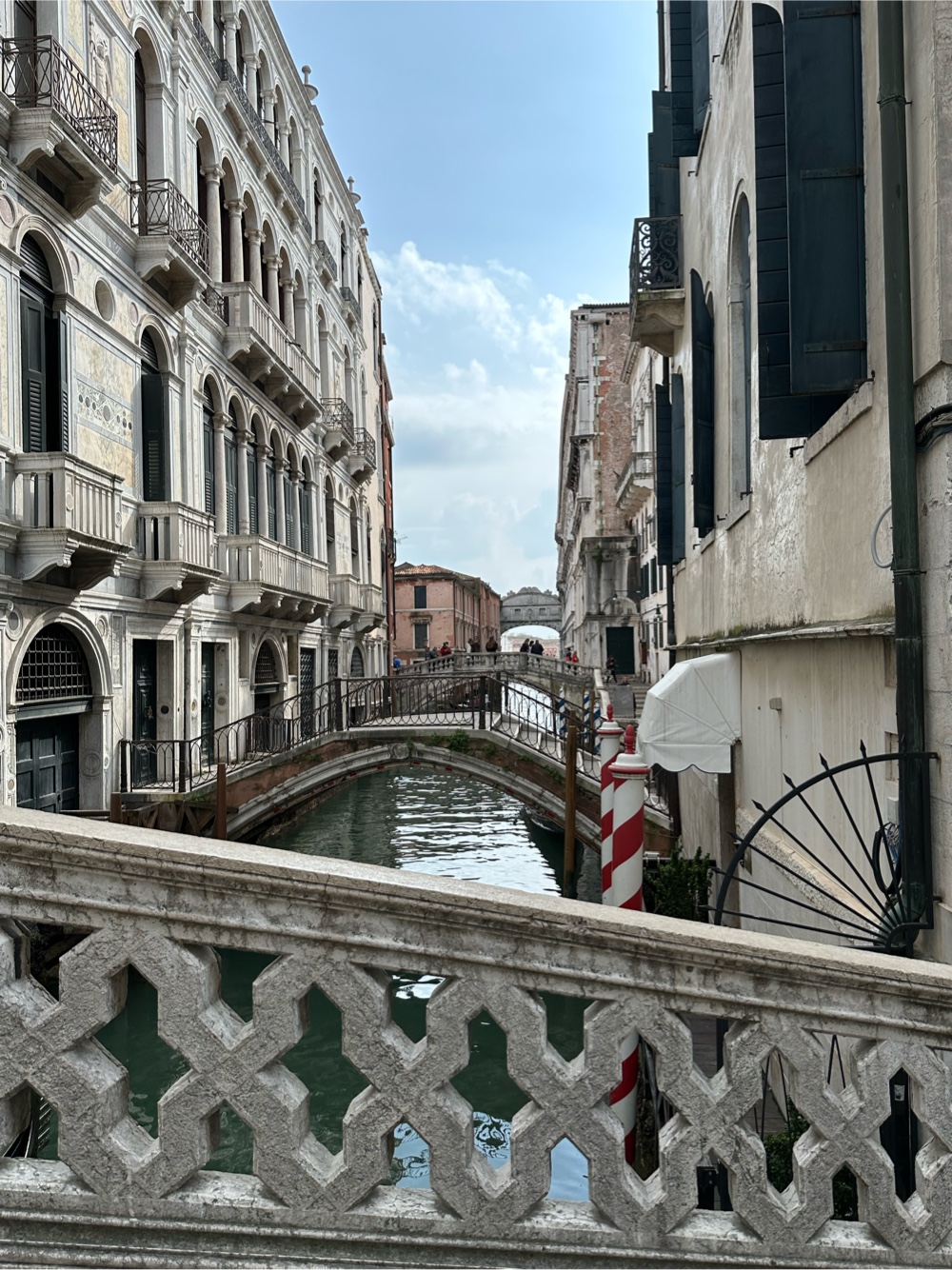
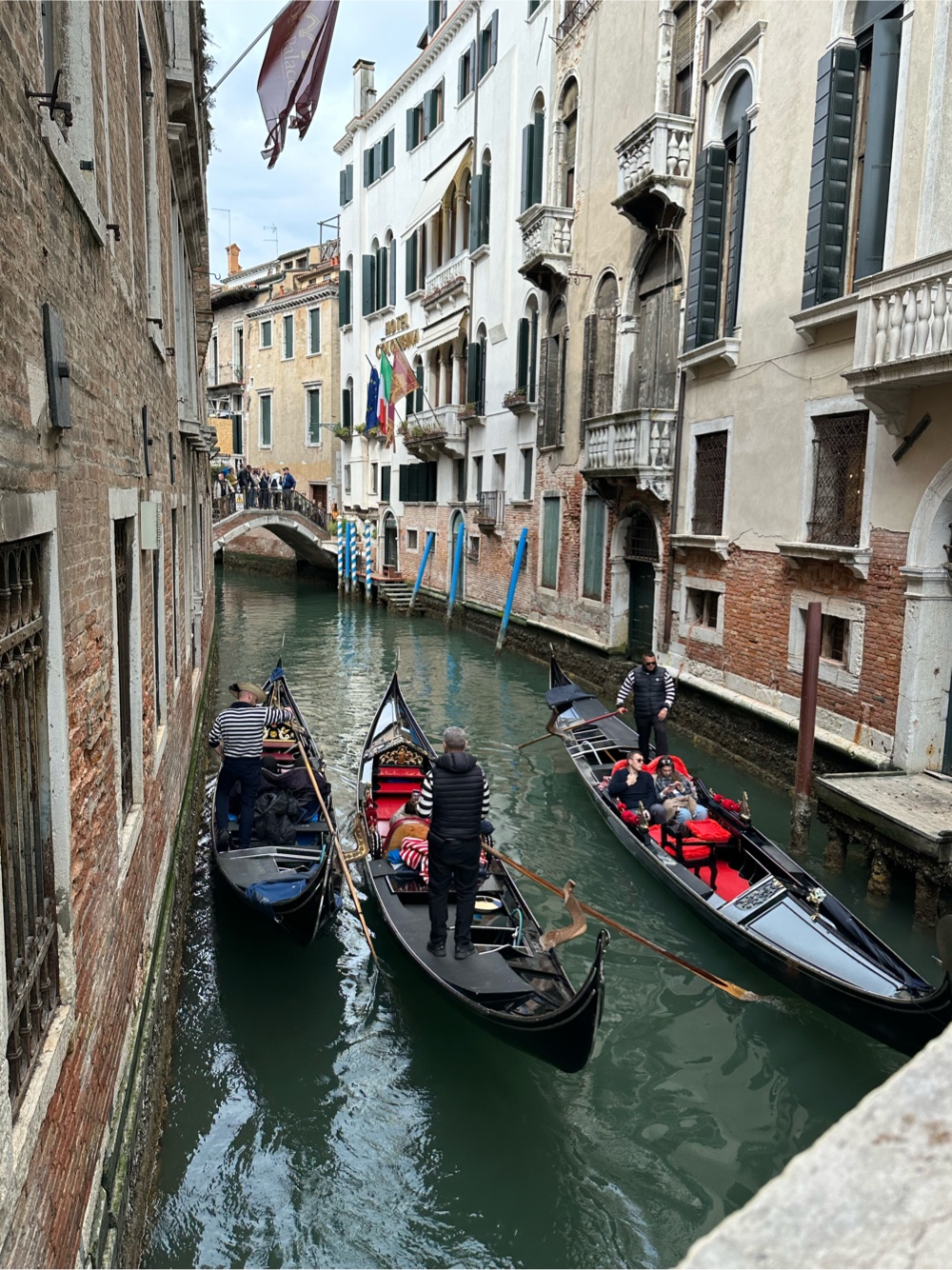
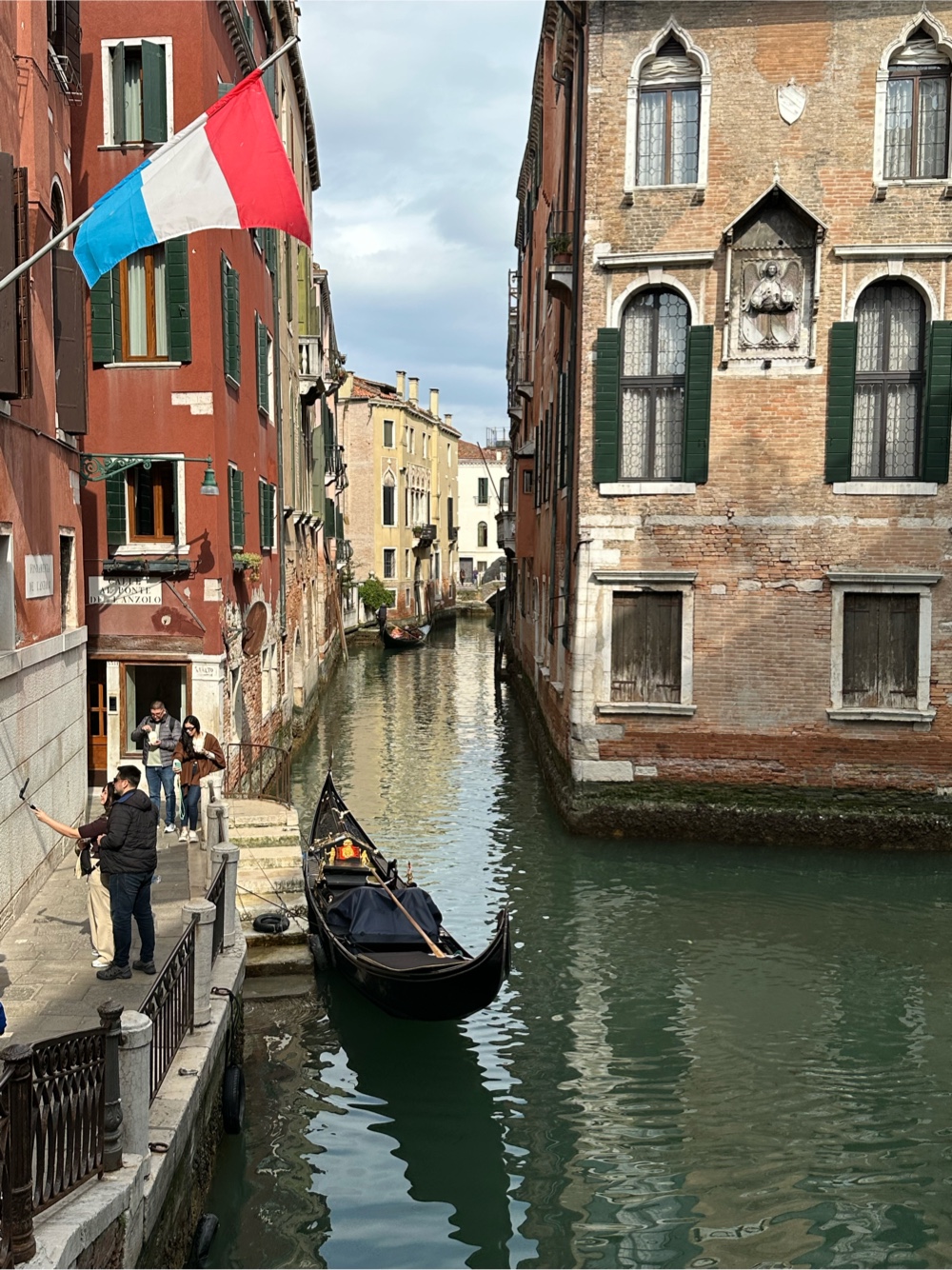
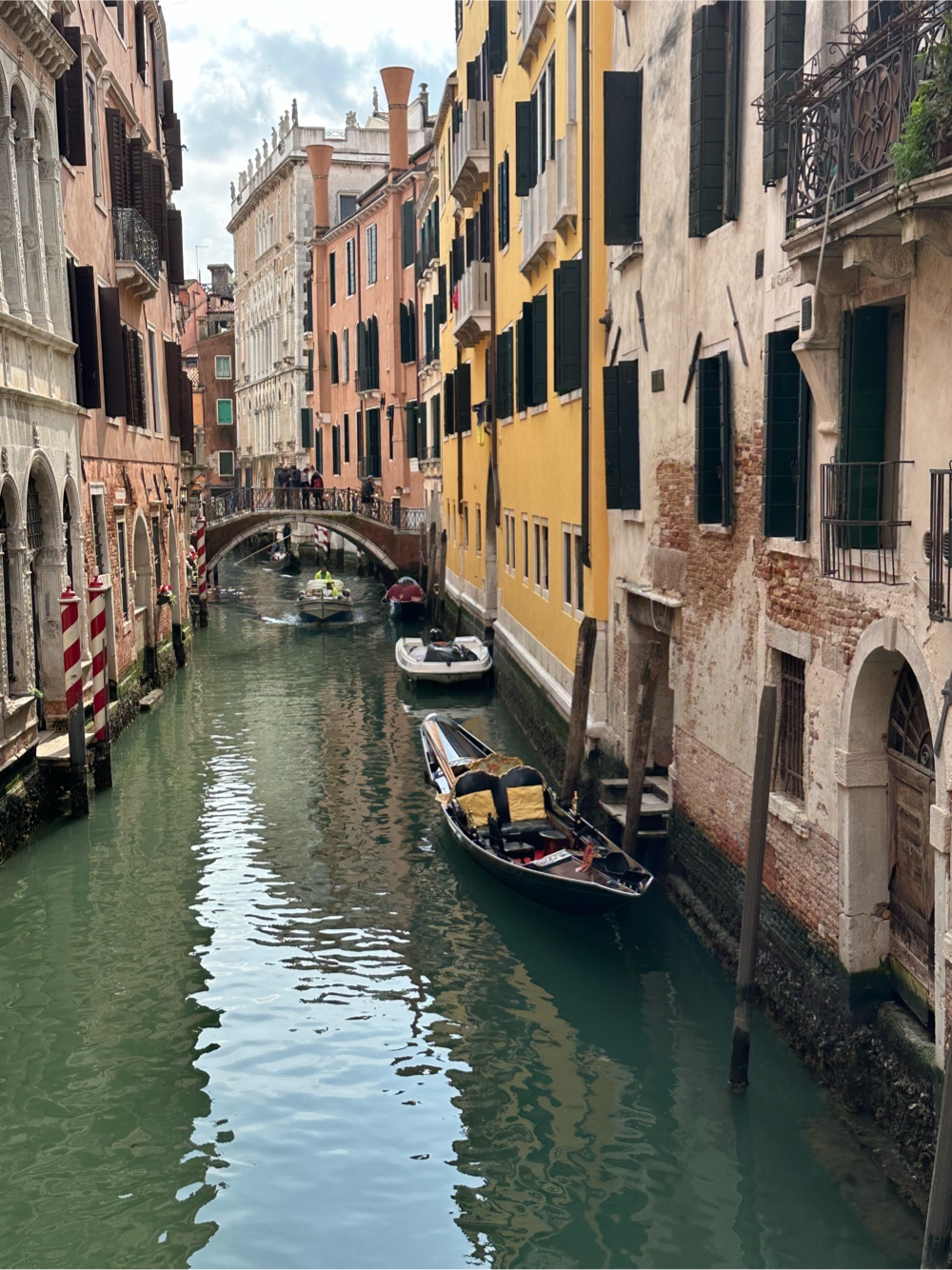
The views from Grand Canal - buildings, boats, tiny side canals, foot bridges (no need for automobile bridges here) were fascinating.
What looks like an arch in the far background of the picture below, beyond the foot bridges, is actually a fully enclosed bridge between the courtroom in the Doge’s palace and the prison on the other side. There are small cutouts in the stone where condemned prisoners could take their last looks at the outside world. It was called the Bridge of Sighs.
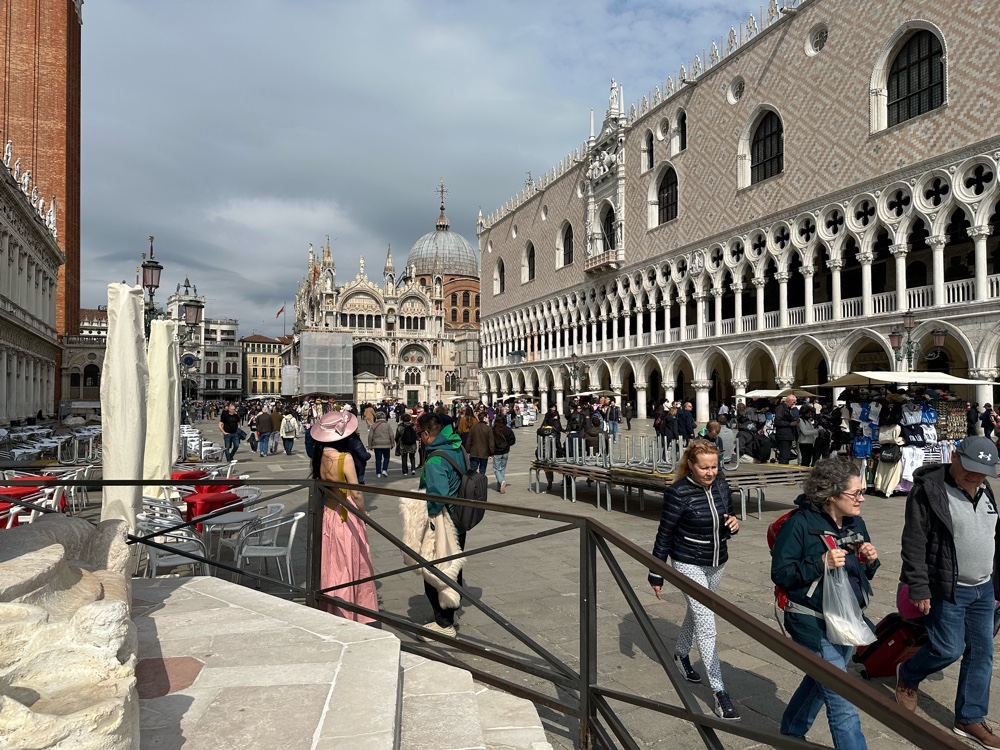
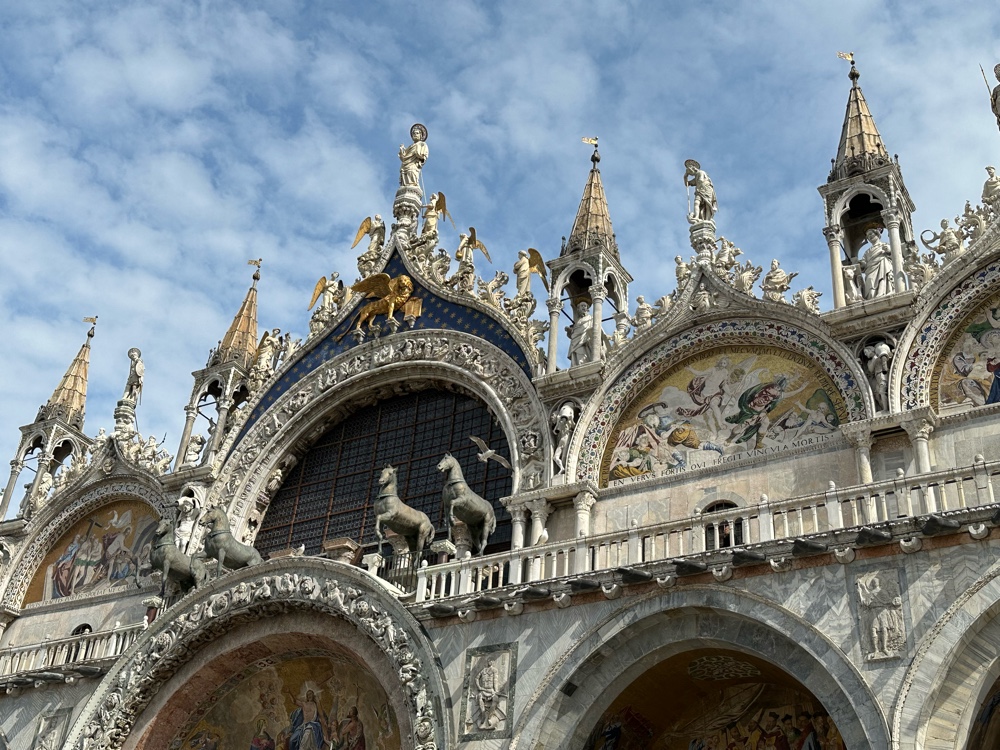
Our destination, St. Mark’s Square, seemed crowded to us, but, in fact, the crowds were sparse compared to the high season, which begins in a few weeks with Easter.
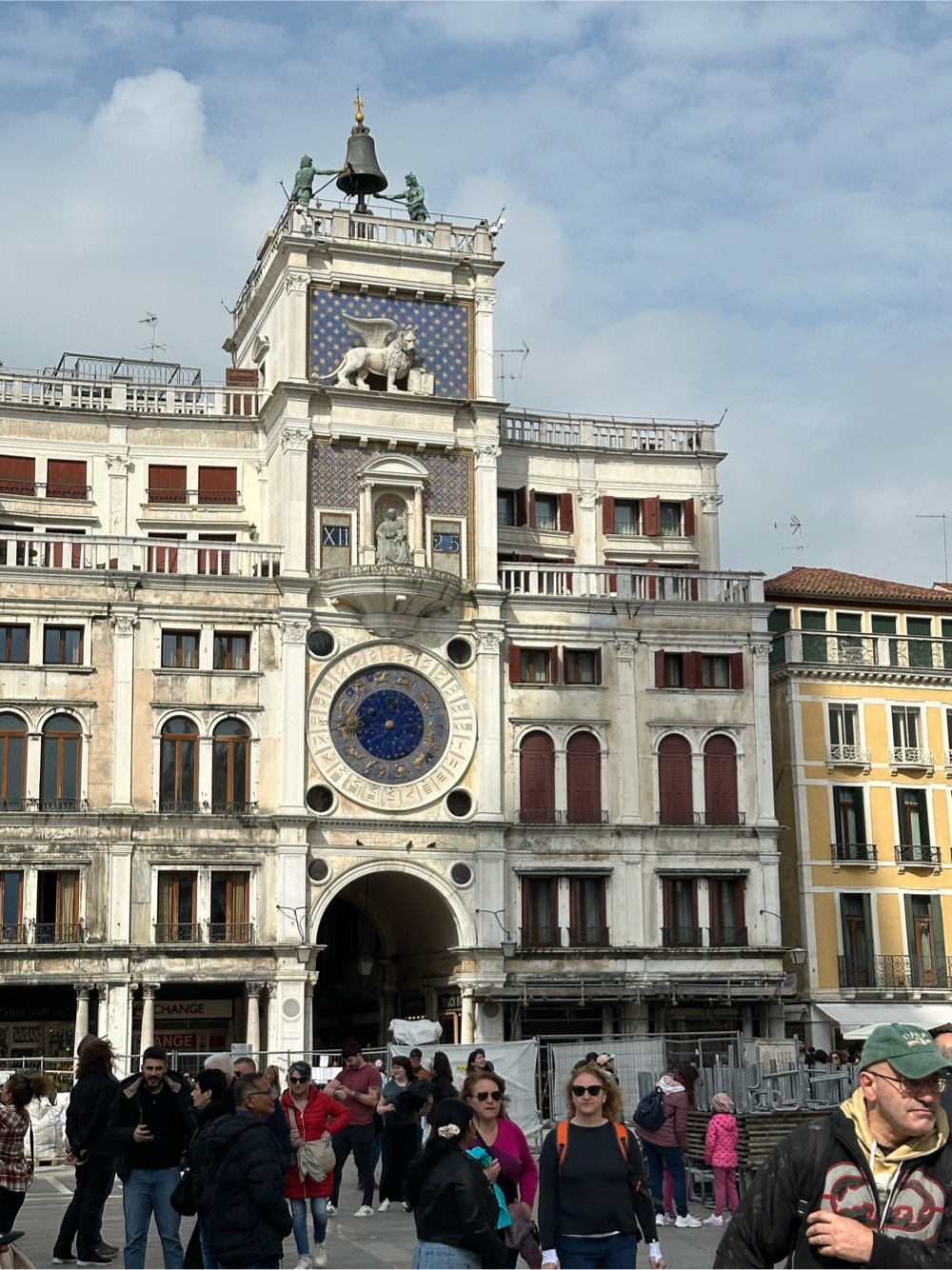
One of the famous landmarks is the astronomical clock tower in one corner of the square. This is the second-oldest such clock in the world - the oldest is in Prague.
We had lunch in one of the many little restaurants on a side street outside of St. Mark’s Square. Deciding to make this our main meal today, we opted for the Menu del Giorno (menu of the day), which consisted of a choice of pasta for the first course and a fish or meat dish for the second. We topped it off by splitting a tiramisu for dessert.
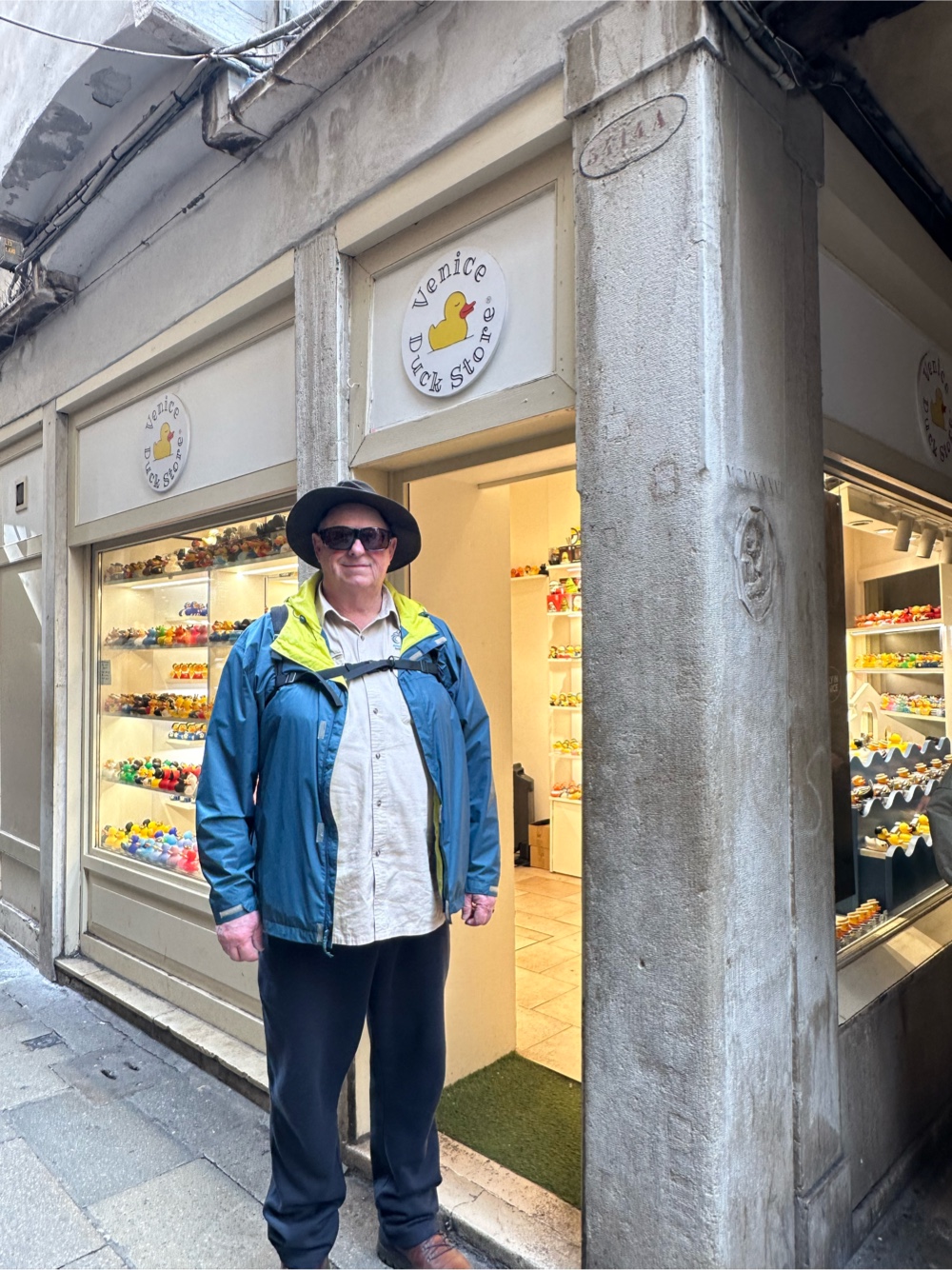
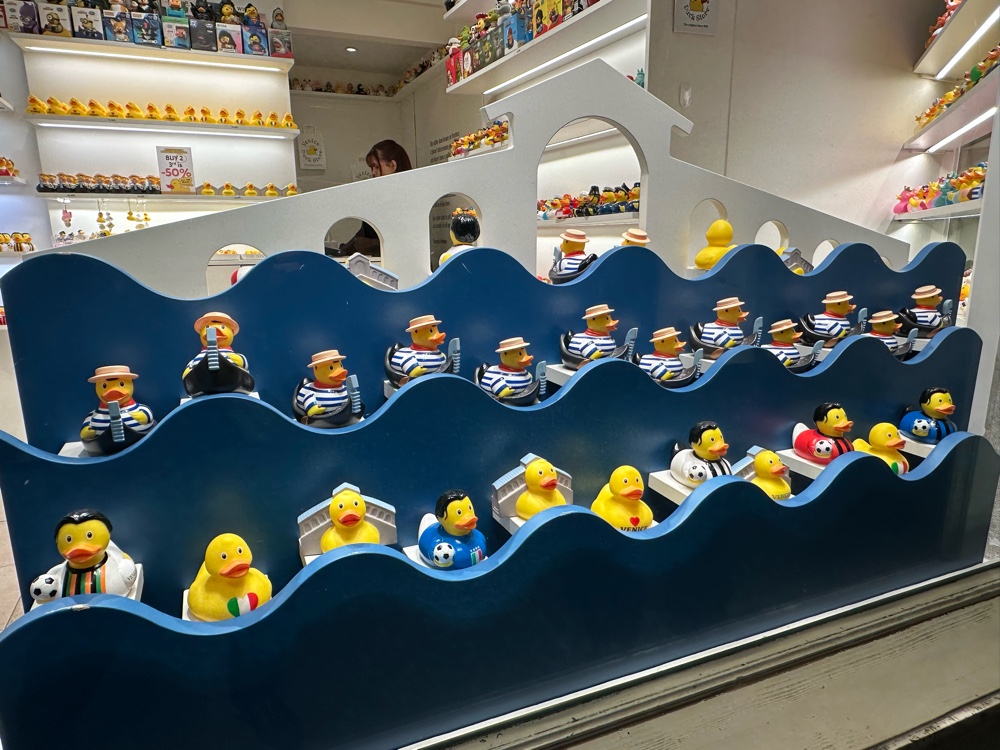
As we strolled through the maze of side streets (more like narrow pedestrian alleyways) we came upon the rubber duck store where I bought a gondolier duck for John the last time I was here.
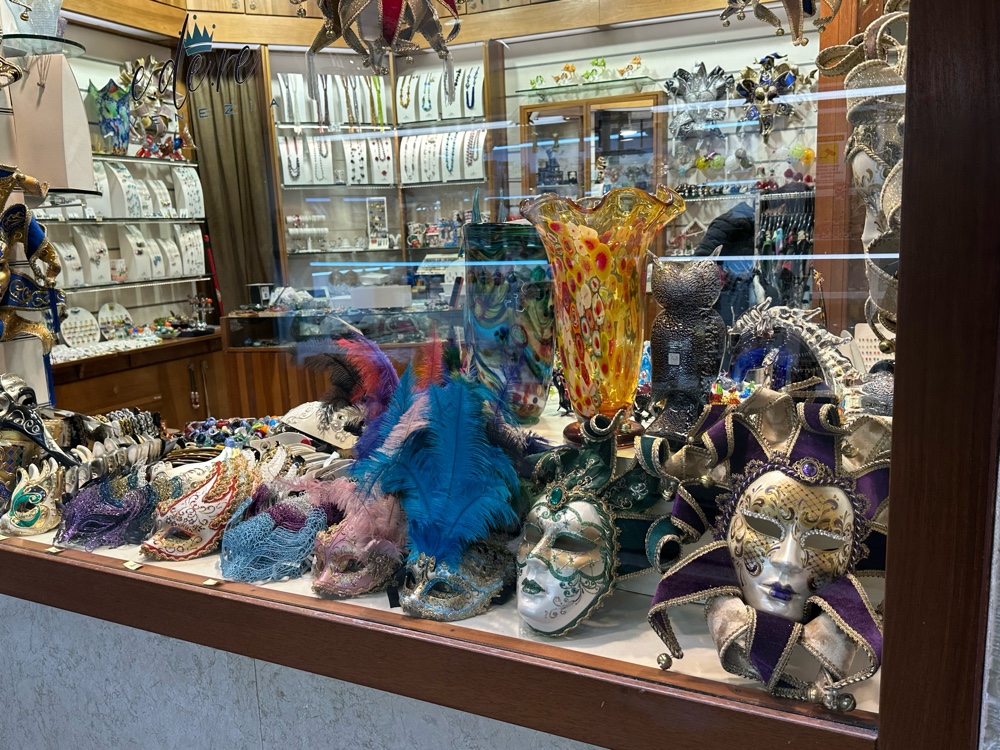
The Carnival season that precedes Ash Wednesday has traditionally been a big deal in Venice, and shops sell the elaborate masks year-round.
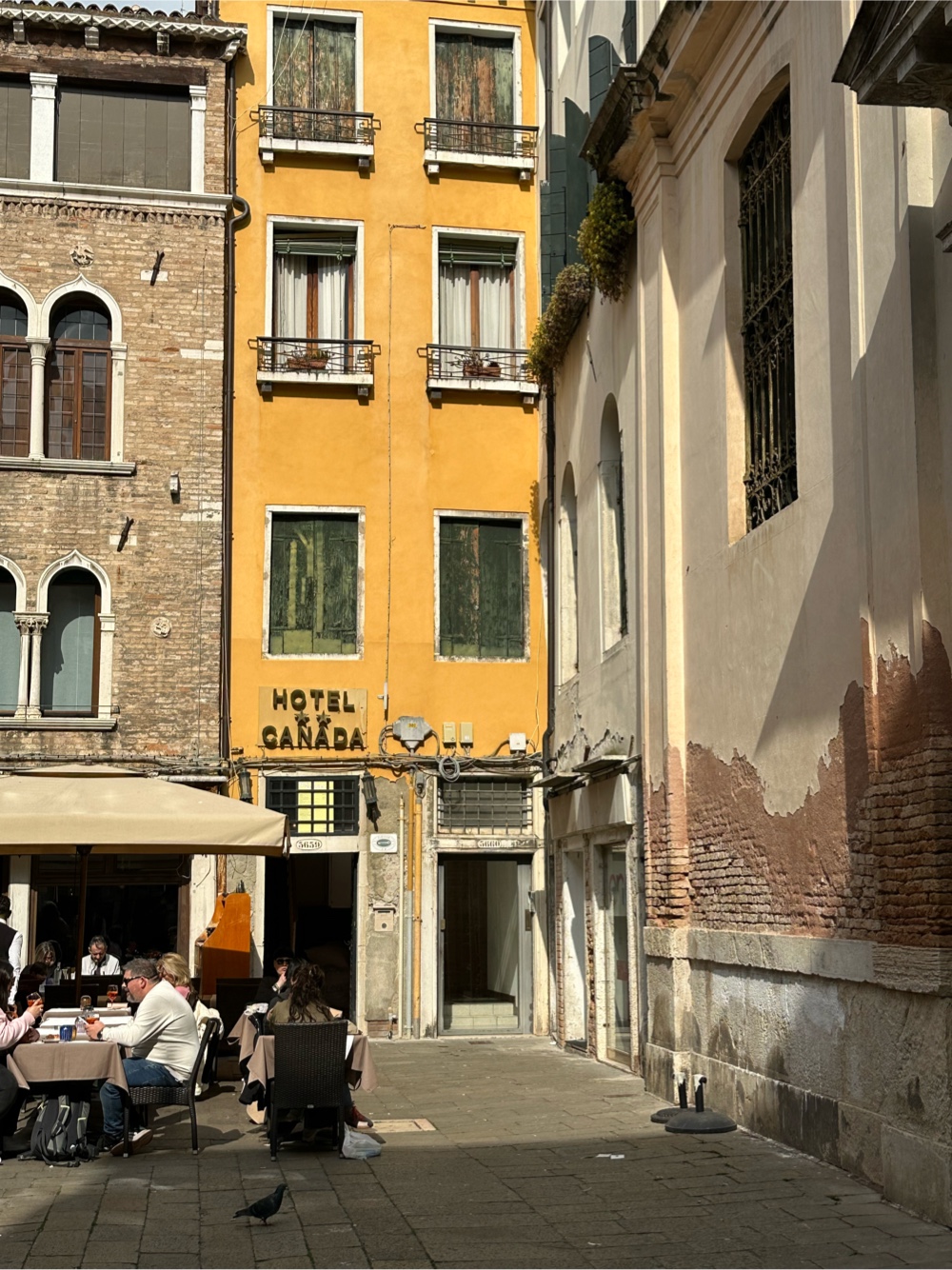
We also came across the hotel where we stayed 20+ years ago when Chuck and Sheryle and I took our first Rick Steves tour.
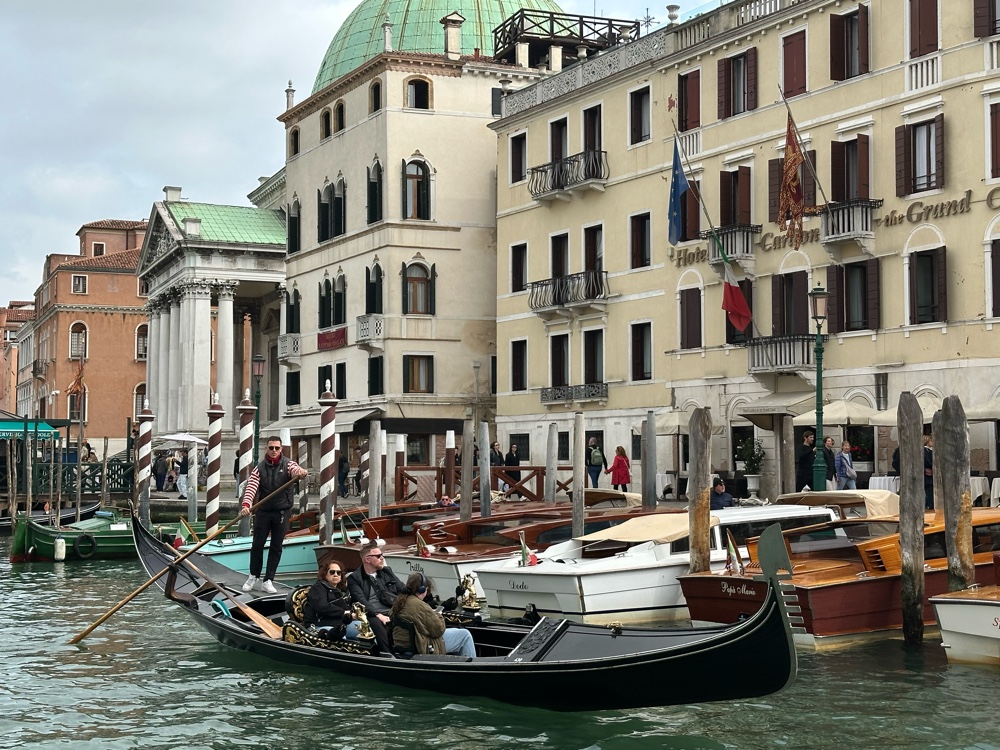
And we saw lots of gondolas. As ubiquitous as they seem, apparently there are only a fraction of the number there used to be back when they were a primary form of transportation.
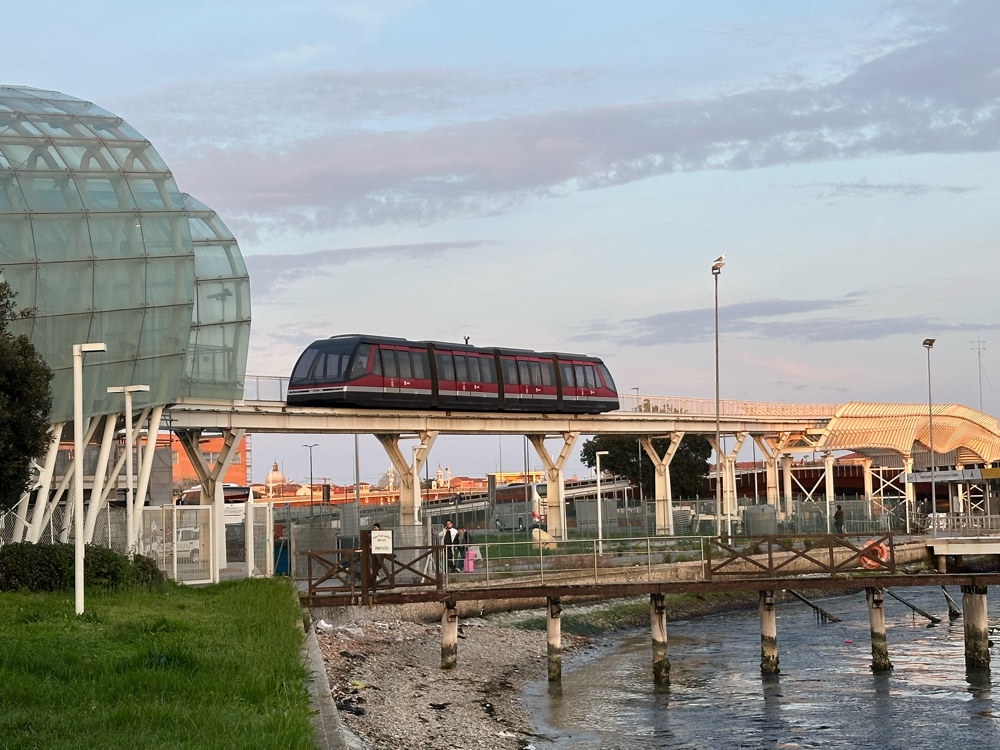
After an afternoon breather back at our hotel, we took a much newer form of transportation. The “People Mover” - yes, the official name is in English - is a tram that crosses the harbor from Isola Nuova (literally “new island”) to Piazzale Roma, which is on Venice proper, including a stop midway at the cruise harbor.
That cruise harbor seems to be being phased out because of damage caused by the ships’ wakes, with the primary cruise port now located on the mainland.
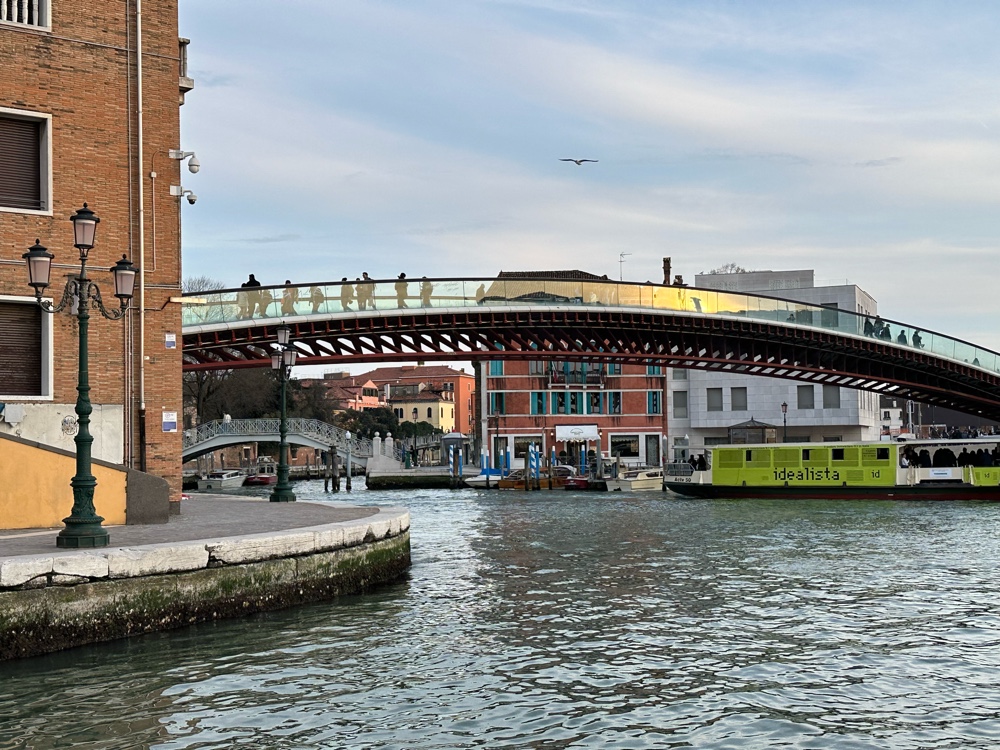
When we got off the tram at Piazzale Roma (which was once the social center of the neighborhood but is now a combination parking lot and bus transit hub), we crossed the modern new bridge that leads to the train station. This area is the utilitarian part of the city, in stark contrast to the rigidly preserved historical city.
This bridge gets lots of style points, but loses them in engineering. For starters, the steps vary in width, some one step wide and others two steps wide, and in places that variation changes from one step to the next. And most of the walking surface is glass - beautiful, but slippery as ice when it’s foggy or raining (which occurs often). Part (not all) of surface has been paved over to try to mitigate this issue.
Venice has changed a lot since I was first here 20 years ago, unfortunately not for the better. Back then its population was more than twice what it is now, and it was still a “living city.” Now it’s more like an historical park.
But it’s still worth seeing.
Comments
Post a Comment